The Brainwave Hack High Performers Use to Stop Overthinking

By Ryan Nichols
Key idea: Overthinking is not simply a “beta brainwave problem.” Brain rhythms change with attention, arousal, sleep, meditation, and hypnosis, but no single frequency equals stress, creativity, or peak performance. The practical goal is learning to shift from relentless cognitive effort into a calmer, more flexible state.
Most people try to solve overthinking with more thinking.
They make another list, analyze the decision again, search for more information, and try to force clarity through effort.
Sometimes that works. Often it just adds more mental noise.
What Brainwaves Actually Tell Us
Your brain produces rhythmic electrical activity that can be measured with EEG. Researchers commonly describe frequency bands such as delta, theta, alpha, beta, and gamma.
Those bands are useful scientific categories, but they are not five simple “gears” where each frequency produces one psychological state.
Delta activity is prominent in deep non-REM sleep.
Theta is involved in processes including memory and drowsiness, and some hypnosis research has found associations between theta activity and hypnotic responsiveness.
Alpha is often associated with relaxed wakefulness and reduced sensory engagement. Some meditation studies report changes in alpha activity.
Beta is common during normal waking thought, attention, and active problem-solving. Beta is not inherently “bad” or synonymous with stress.
Gamma has been studied in relation to information integration, attention, and learning, but its meaning depends heavily on context.
The important point is that your brain uses multiple rhythms at once. Mental states are produced by complex networks, not a single frequency dial.
Why Overthinking Feels So Exhausting
The problem is not that you are “stuck in beta.” The problem is often that your system stays in effortful cognitive engagement without enough recovery.
You keep evaluating. Predicting. Comparing. Checking. Rehearsing.
That can create a loop where the attempt to find certainty actually keeps uncertainty active.
If you are an entrepreneur or high achiever, this is especially easy to mistake for productivity. Your mind is busy, so it feels as if useful work must be happening.
But thinking harder is not always the same as thinking better.
What Helps You Shift State
You do not need to “force your brain into theta.” A better goal is to create conditions that reduce arousal and loosen the grip of repetitive thought.
Slow the breath. Research on slow breathing shows measurable effects on cardiovascular and autonomic regulation. A few minutes of comfortable, slower breathing can be a useful way to settle the body before trying to solve the problem again.
Use meditation or quiet attention. EEG research on meditation does show changes in brain rhythms, although findings vary substantially by practice, experience, and study design.
Try guided hypnosis or visualization. Hypnosis is associated with changes in attention and, in some studies, theta and gamma activity. It is better understood as focused attention and responsiveness to suggestion than as a guaranteed shift into one specific frequency.
Create unstimulated time. Walking, showering, sitting quietly, or stepping away from the screen gives the mind a chance to stop actively manipulating the problem.
This is not wasted time. Sometimes clarity needs less input.
A Simple Reset for Overthinking
When you notice yourself spinning, try this:
1. Name the loop. “I am trying to think my way into certainty.”
2. Stop adding information for three minutes. No browser tabs, no messages, no notes.
3. Slow your breathing. Let the exhale be comfortable and unforced.
4. Ask one question: “What is the next useful action I can take with the information I already have?”
You may still need more information. But you will be making that decision from a different state than the one that created the spiral.
The Takeaway
Brainwaves are real. The simplistic internet version of brainwaves is not.
The useful lesson is not “beta bad, theta good.” It is that the brain is dynamic, and you can influence your state through attention, breathing, meditation, imagery, hypnosis, movement, and recovery.
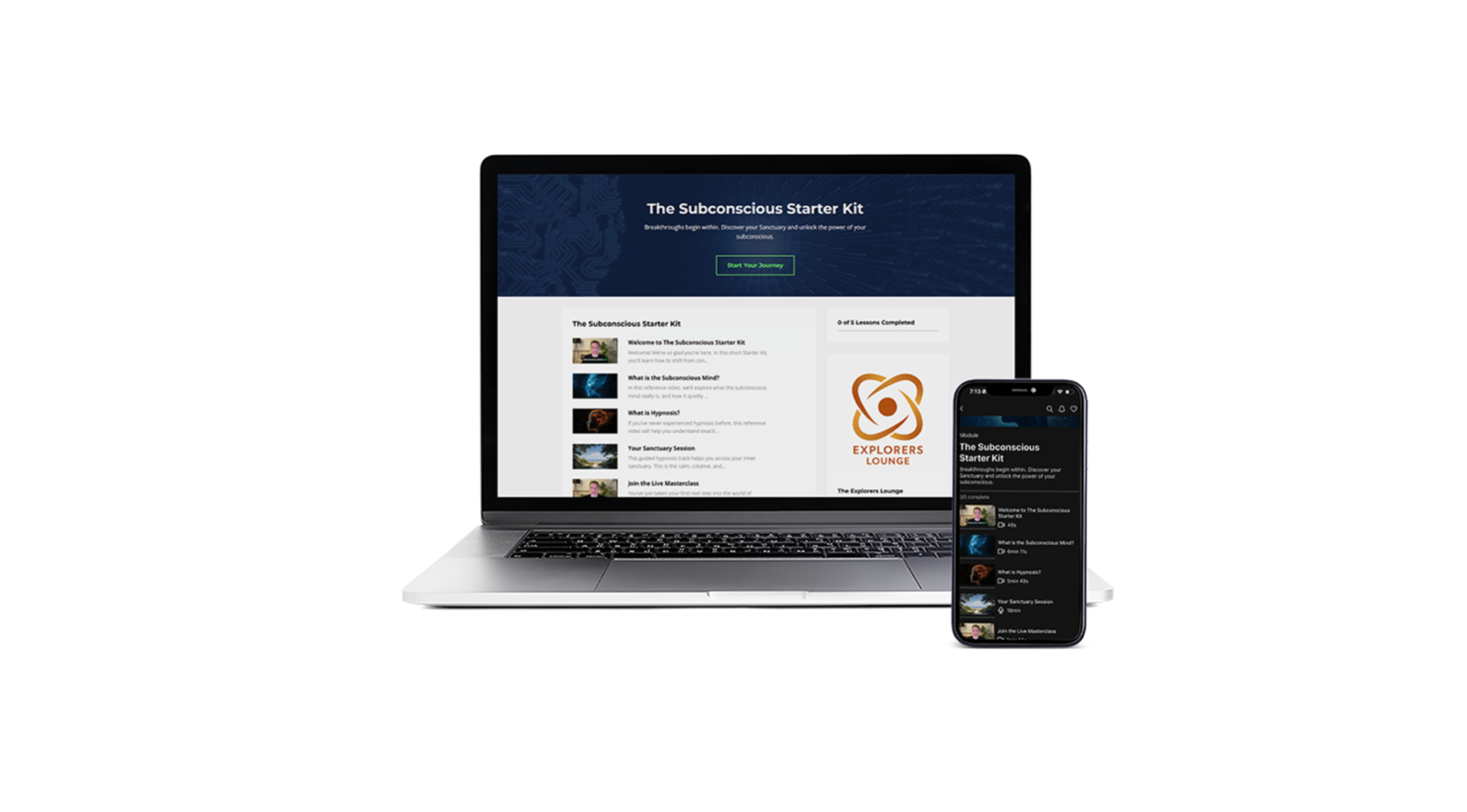
If you want a guided way to experience that shift, the free Subconscious Starter Kit includes a guided hypnosis experience and foundational lessons on subconscious patterns.
Sources & Further Reading
- EEG oscillatory correlates of meditation practice: systematic review and meta-analysis (2026)
- Brain Oscillations, Hypnosis, and Hypnotizability (2015)
- Functional Changes in Brain Activity Using Hypnosis: systematic review (2022)
- The physiological effects of slow breathing in the healthy human
If you want to explore this idea further, you may also find What Constant Stimulation Is Doing to Your Brain and The Hidden Switch in Your Brain useful.
Start with the Free Starter Kit to better understand the patterns behind your resistance, build steadier internal alignment, and access our free live training.