Why You Underestimate What You Know, and How to Recognize Its Value

By Ryan Nichols
A piece of knowledge can become so familiar that you stop noticing what it makes possible.
You use it to recognize a problem, ask a useful question, or avoid a mistake. Yet when you consider sharing it, you hesitate. Surely everyone knows that already.
For coaches, consultants, creators, and people considering those roles, this can become a quiet barrier to contribution. You dismiss the article before writing it. You hold back in a conversation. You assume you need more advanced knowledge before you can offer anything worthwhile.
But familiarity is a poor measure of usefulness. The more relevant question is what your knowledge could help a particular person understand or do.
How familiarity can hide the value of your knowledge
I’ve spoken with people who reject blog or video ideas because the information seems too obvious. I’ve also spoken with hesitant coaches who question whether their knowledge is advanced enough to help.
In both situations, it’s worth examining how that judgment is being made.
The curse of knowledge describes the difficulty of setting aside information you possess when judging the perspective of someone who doesn’t have it. In their 1989 research, Colin Camerer, George Loewenstein, and Martin Weber examined this bias in economic judgments. Better-informed participants struggled to disregard their additional information when estimating less-informed people’s judgments.
That research didn’t test whether coaches undervalue their expertise. It does, however, provide a useful lens for examining an assumption behind that behavior: other people may understand less about a subject than your own familiarity leads you to expect.
You’ve encountered an idea repeatedly, applied it, and perhaps made it part of how you work. Someone else may never have heard it explained clearly.
“I already know this” and “this wouldn’t help them” are different judgments.
Imagine a client tells their coach, “If I say no when someone asks for help, I’m being selfish.”
The coach helps them consider that they can care about someone and still set a limit. That may feel elementary to the coach. For someone who feels guilty every time they say no, it could introduce a meaningful possibility.
The contribution includes recognizing when an idea is relevant and helping someone apply it to their situation. It doesn’t always require a new or complicated insight.
When “too basic” becomes a comfortable reason to hold back
You may never consciously decide that everyone has the same knowledge you do. An idea simply feels obvious, and that feeling becomes your answer.
This is where the topic connects with subconscious patterns: an automatic assumption can influence your behavior before you examine it. I explore the broader question of assumptions becoming accepted conclusions in Why Your Brain Believes Things That Aren’t True.
Sometimes, dismissing an idea also offers relief. If it isn’t worth sharing, you don’t have to risk disagreement. If you need more experience before offering any guidance, you can postpone being questioned.
That doesn’t mean every hesitation is self-protection. Your idea may need development, or you may have identified a genuine gap in your skills. Two questions can help clarify the difference:
- What specifically needs improving before this could help someone?
- What am I worried might happen if I share it?
A clear answer to the first question gives you preparation to do. The second may reveal discomfort that further preparation won’t entirely remove.
Feeling unqualified and misjudging what others know are also different issues, even when they occur together. If being seen as an authority is the more pressing concern, Why “Imposter Syndrome” Shows Up When Things Are Going Well explores that related experience.
Consider the person who could benefit
When you evaluate your contribution only through questions such as “Will I sound credible?” or “Am I experienced enough?”, your attention stays on how you’ll be perceived.
Including the recipient’s perspective changes the assessment.
What are they struggling with? What have they misunderstood? Could your explanation help them avoid a mistake, make a decision, or recognize an option they hadn’t considered?
An ordinary conversation for you could be an important turning point for them. Holding back may mean that help never reaches someone who could use it.
This doesn’t make you responsible for everyone’s difficulties. It gives you another reason to assess your contribution fairly.
The same shift can be useful when speaking to a group. Rather than monitoring every detail of your delivery, you can return your attention to what the audience needs to understand. Nervousness may remain, but helping them gives you a reason to continue.
You can bring that focus to a coaching conversation, an article, or a short explanation shared with a colleague.
Give one overlooked idea a fair assessment
Choose an idea you’ve dismissed as too basic and consider a particular person who might benefit.
Identify what it could help them understand, avoid, or do. Then look for evidence: questions they’ve asked, difficulties they’ve described, or misunderstandings you’ve noticed repeatedly.
Those observations offer a stronger basis for judging usefulness than your own sense of familiarity.
Be specific about the contribution. “Helping people with boundaries” is broad. Helping someone recognize that caring about another person doesn’t require agreeing to every request is a clearer starting point.
Some ideas will need more substance. Some problems will fall outside your competence. Recognizing value includes recognizing those limits.
When you do identify a need you’re equipped to help with, share the explanation and listen to the response. Did it clarify anything? What remains confusing? Their feedback can help you refine what you offer.
The next time you think, “Everyone knows that,” ask yourself whether you’ve actually checked.
Something doesn’t have to feel remarkable to you to make a meaningful difference to someone else.
For the accompanying discussion, watch What You Know Could Help Someone. So Why Hold Back?
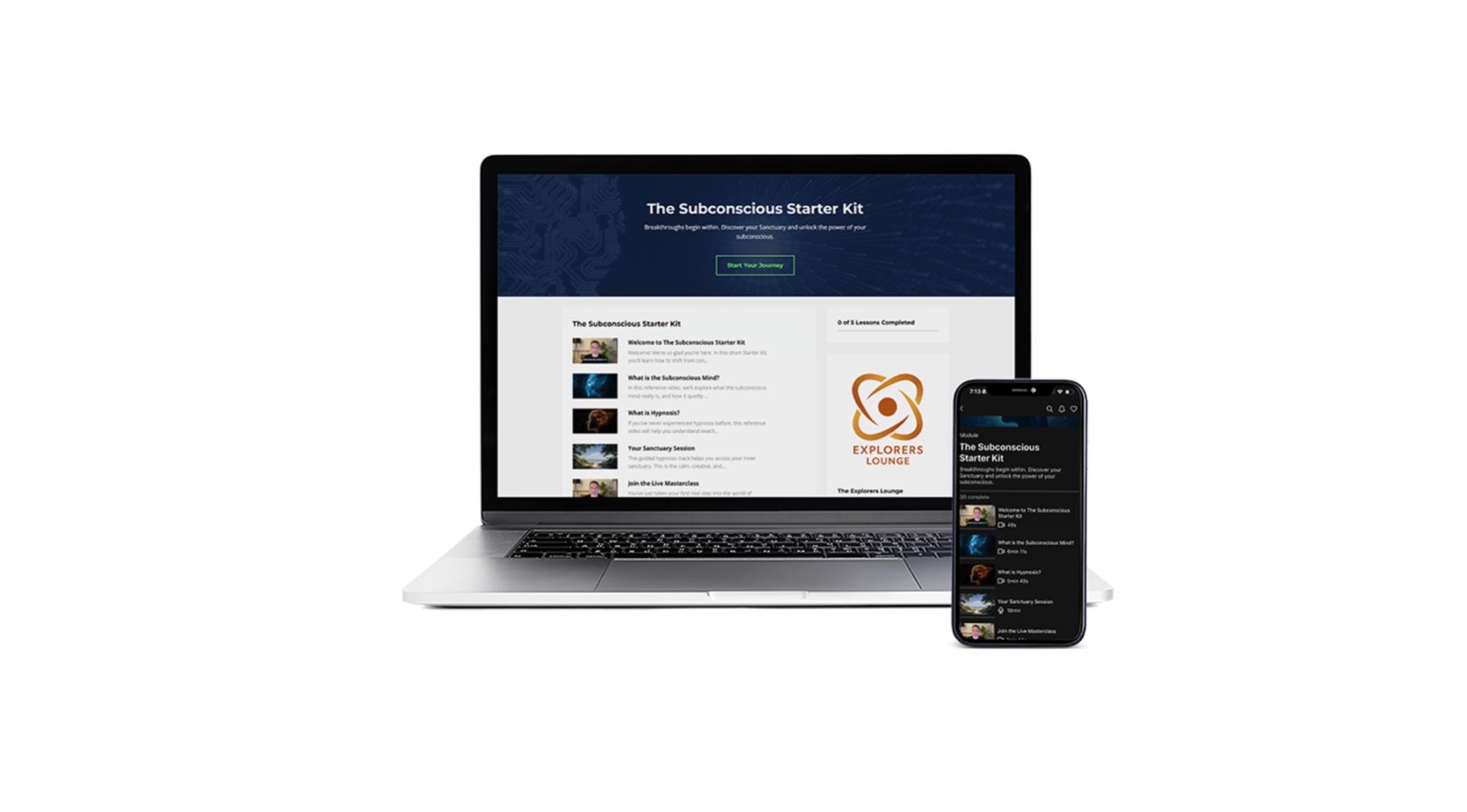
Recognizing an automatic assumption is one starting point for exploring the patterns that influence your choices. The free Subconscious Starter Kit includes introductory videos and the Sanctuary Session, a guided relaxation audio where you create an imaginary sanctuary. If you already have access, you can return to those resources as you explore the patterns you’re noticing.
Breakthroughs begin within.
Further reading
Camerer, C., Loewenstein, G., & Weber, M. (1989). The Curse of Knowledge in Economic Settings: An Experimental Analysis. Journal of Political Economy, 97(5), 1232–1254.
Start with the Free Starter Kit to better understand the patterns behind your resistance, build steadier internal alignment, and access our free live training.