Why You Only Take Action Under Pressure
By Ryan Nichols
Key idea: A deadline can reduce ambiguity and increase urgency, but chronic last-minute action is often better understood as procrastination and short-term mood regulation than as a special ability to “work best under pressure.”
There’s a peculiar transformation that happens when you discover guests are arriving in forty minutes.
The clutter you’ve been walking past all week suddenly becomes impossible to ignore. Within moments, you’re cleaning, organizing, making quick decisions, and moving through the house with a level of efficiency that seemed unavailable an hour earlier.
Nothing about your ability changed. The mess didn’t become easier to deal with. What changed was the emotional environment.
There was now a deadline.
The same thing happens with work, difficult conversations, unanswered messages, and decisions we’ve been postponing. Something can sit untouched for days, carrying a low hum of guilt in the background, until the consequences become immediate. Then, almost magically, the fog clears and action becomes possible.
We often explain this by saying, “I work better under pressure.”
Sometimes pressure does sharpen performance. A clear deadline can narrow our attention and pull us out of indecision. But when urgency becomes the only reliable way we know how to move, a useful burst of pressure has turned into a pattern.
Urgency Gives You Borrowed Certainty
Many tasks are difficult long before we actually begin them.
Until there’s a deadline, we’re left with choices. We can start now, later, or tomorrow. We can do it this way or that way. We can wonder whether we’re ready, whether the result will be good enough, or whether the decision is the right one.
Urgency clears away much of that uncertainty. The deadline decides when you’ll act. The consequence determines what deserves your attention. Options disappear, and with them, much of the emotional negotiation.
In that sense, urgency gives you borrowed certainty.
You don’t have to trust your own decision completely. Circumstances have made the decision for you.
That can feel surprisingly relieving. Before the pressure arrives, the task is surrounded by ambiguity. Once the situation becomes urgent, at least you know what needs to happen next.
The deadline creates a tunnel, and inside that tunnel you can focus.
How Pressure Becomes a Habit
The pattern tends to reinforce itself.
Research on procrastination supports an emotion-regulation explanation: difficult or aversive tasks can trigger negative feelings, and delaying the task provides temporary relief. Under stress, tolerance for those uncomfortable states can drop further, making avoidance more likely.
You delay, the pressure rises, and eventually you act. Once the task is finished, there’s an immediate release of tension. That relief can be powerful.
Over time, your system begins to recognize the sequence: first comes stress, then action, then relief.
You may still complete the project and produce good work. You might even receive praise for always pulling things together at the last moment. From the outside, the pattern can look like resourcefulness.
Inside, however, you’re repeatedly teaching yourself that stress is the price of movement.
Urgency starts functioning like an external nervous system. It organizes your attention, supplies energy, and tells you what matters. When there’s no immediate consequence, it can feel as though the internal switch hasn’t been turned on yet.
This is one reason calm action can feel strangely difficult. You may have the time, the plan, and every practical resource you need, but without the familiar pressure, something seems to be missing.
The Discomfort Hidden Inside Calm Action
When there’s no crisis, you have more room to think. Unfortunately, that also gives doubt more room to speak.
A simple action can become tangled in questions about timing, quality, judgment, and what might happen afterward. You may decide that you need a little more information or that tomorrow would be a better day to begin.
Pressure silences much of that conversation. Calm leaves you alone with it.
There’s also a subtle protection in waiting until the last minute. If the result isn’t perfect, you can blame the deadline. If the idea doesn’t work, you can tell yourself there wasn’t enough time. The urgency provides a reason for any imperfection.
Acting early offers less emotional cover.
You have to make a choice before circumstances force you. You have to stand behind what you create without being able to point to the emergency that rushed you. That can leave you feeling more exposed than acting under pressure, even when the actual task is exactly the same.
For entrepreneurs and creators, this pattern can become especially costly. An idea may remain half-developed for weeks until the calendar becomes empty or money begins to feel tight. Suddenly, the emails are sent, the offer is finished, and the conversations happen.
The capability was there all along. The pressure simply became louder than the fear.
Teaching Yourself a Different Sequence
Breaking this pattern doesn’t require turning yourself into a relentlessly disciplined machine. More pressure would only strengthen the association you’re trying to change.
A better place to start is with one thing you normally postpone until urgency takes over.
Ask yourself:
What is the smallest honest action I could take before this becomes urgent?
That might mean writing the first paragraph, sending a simple message, or making the initial decision. The point isn’t to finish everything immediately. You’re creating an experience of movement without panic.
Pay attention to how that feels.
There may be restlessness, uncertainty, or a sense that there isn’t enough emotional energy behind the action. That doesn’t mean you’re doing it wrong. It may simply mean that calm movement is unfamiliar.
Each time you act before the crisis, you begin teaching your system a different sequence: clarity, action, then relief.
The more often you repeat that sequence, the less your subconscious has to rely on stress as the signal to begin.
Watch the Video
I explore this pattern more deeply in my video, Why You Only Take Action Under Pressure.
We’ll look at why urgency can create such powerful temporary focus, how people become dependent on crisis mode, and what it takes to make calm action feel more natural.
You can watch the video below or open it directly on YouTube.
Start Working With the Deeper Pattern
When pressure has become your doorway into action, another productivity technique may only address the surface. The deeper work involves changing the internal association between stress and movement.
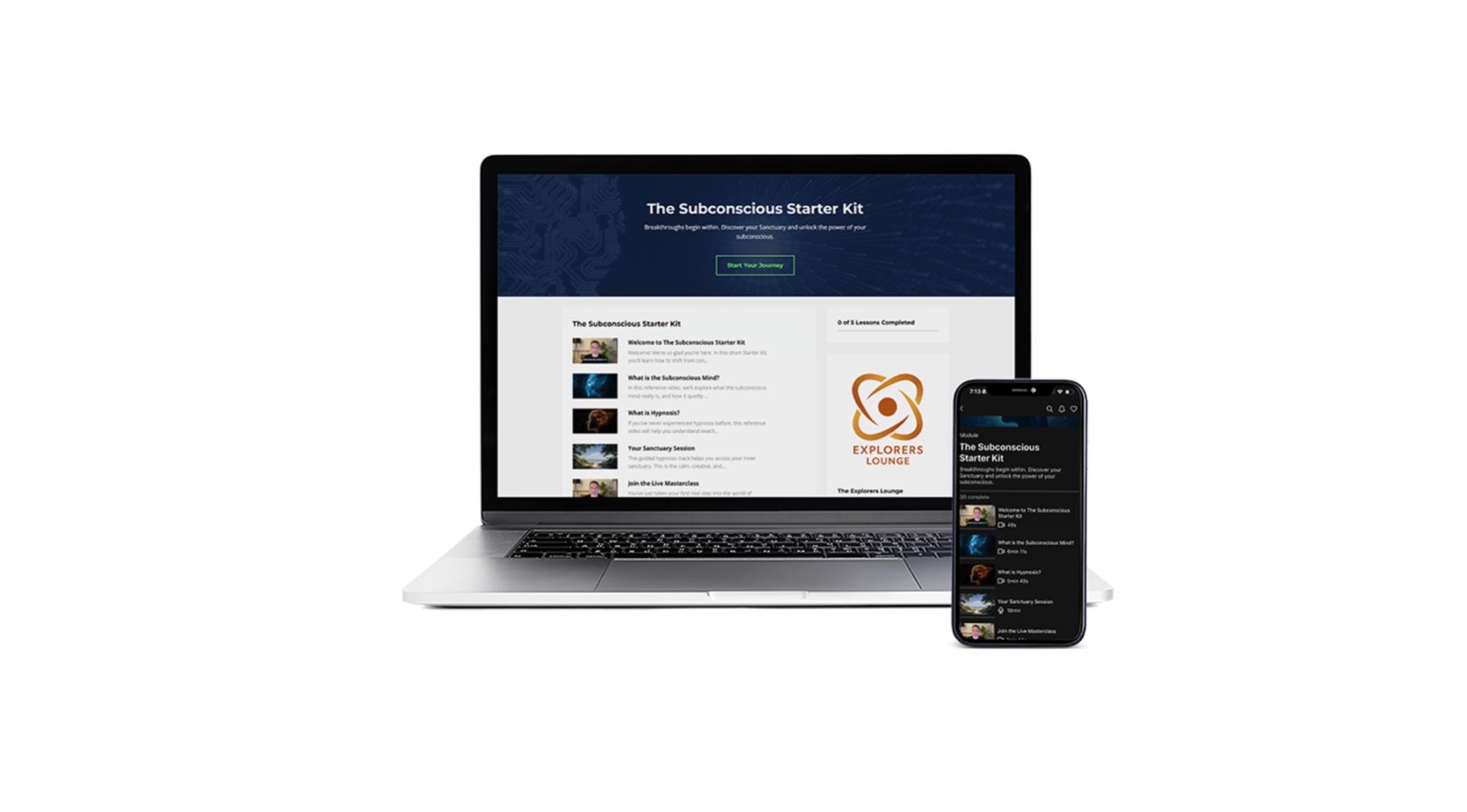
That’s one of the reasons we created the free Subconscious Starter Kit.
It will introduce you to the deeper patterns shaping your thoughts, emotions, and follow-through, and includes the Sanctuary Session guided audio to help you begin working with your subconscious more directly.
Breakthroughs Begin Within.
Sources & Further Reading
- Sirois (2023), Procrastination and Stress: A Conceptual Review of Why Context Matters
- Procrastination and negative emotions: systematic review and meta-analysis
If you want to explore this idea further, you may also find Why Your Brain Is Addicted to Distraction (And How to Break Free) and The Hidden Reason You’re Always Busy but Still Stuck useful.
Start with the Free Starter Kit to better understand the patterns behind your resistance, build steadier internal alignment, and access our free live training.