What Constant Stimulation Is Doing to Your Brain
By Ryan Nichols
Key idea: Frequent digital stimulation can fragment attention in the short term and strengthen habits of checking and task-switching. Evidence about permanent or long-term “rewiring,” however, is much less certain than popular explanations often imply.
There’s a small shift that has happened over the last decade that most of us barely noticed while it was happening.
We don’t really have empty moments anymore.
Standing in line used to mean standing in line. Waiting for someone used to mean waiting. Sitting on a bench meant just sitting there, watching the world move.
Now those moments are filled almost automatically. We reach for our phones before we consciously decide to. We check something, scroll something, refresh something. It feels trivial. Harmless. Just a quick glance.
But those quick glances accumulate.
And over time, they can shape habits of attention: what you reach for automatically, how often you switch tasks, and how comfortable uninterrupted focus feels.
You might notice it in subtle ways. Reading feels harder than it used to. Long-form concentration feels heavier. A quiet evening without background noise feels slightly uncomfortable. Even sitting on a beach — which should feel calming — can come with a strange restlessness, as if your nervous system doesn’t quite know what to do without input.
Most people interpret this as a willpower issue. They assume they’ve become less disciplined or more distracted.
What may be happening is a learned pattern of attention.
The brain adapts to repeated experience, but that does not mean short-form media permanently rewires everyone in the same way. Reviews of smartphone use and cognition find evidence for immediate effects on attention and memory in some contexts, while long-term effects are harder to establish and findings are mixed.
What is clearer is behavioral: notifications, novelty, social rewards, and easy access make switching attention extremely convenient. Repeating that sequence can turn checking into a habit.
Dopamine is involved in reward learning and motivation, but “dopamine addiction” is an oversimplification. Classic reward-learning research shows that dopamine neurons can signal differences between expected and actual rewards, helping cues acquire motivational significance.
So the problem is not that your phone drains or floods one chemical. It is that a highly responsive environment can repeatedly train the sequence: cue, check, novelty, repeat.
Over time, that can make sustained attention feel less automatic simply because interruption has been practiced more often.
That shift may seem small, but it has real implications. Attention shapes emotional state. Emotional state shapes behavior. Behavior, repeated often enough, shapes identity.
If your baseline becomes slightly restless, slightly externally driven, slightly agitated, that tone begins to color your decisions. You may find it harder to tolerate slow conversations, harder to stay present in deep work, harder to sit with uncomfortable thoughts without escaping into input.
Quiet, low-stimulation periods may still matter, but not because the brain must enter a particular “alpha” or “theta” gear. Meditation and other contemplative practices are associated with changes in EEG rhythms, yet results vary by technique, experience, and study design.
The more practical point is that uninterrupted time removes competing demands on attention. Reading, walking, reflecting, or simply sitting without another stream of input gives you an opportunity to remain with one experience for longer.
Frequent task-switching can carry cognitive costs, and digital environments make that switching unusually easy. That does not make technology inherently harmful. It means the design of your environment can influence the attentional habits you practice most often.
The hopeful part is that habits of attention are trainable.
When you deliberately create small pockets of uninterrupted time, you practice a different behavior: staying with one task, tolerating boredom, and choosing where attention goes instead of responding automatically to every cue.
In the video below, I go deeper into the neuroscience behind this, including how dopamine and reward systems shape attention, how frequent task-switching affects cognitive load, and why reclaiming lower-stimulation states may be one of the most important subconscious skills you can build right now.
If this resonates, watch the full breakdown below or on YouTube.
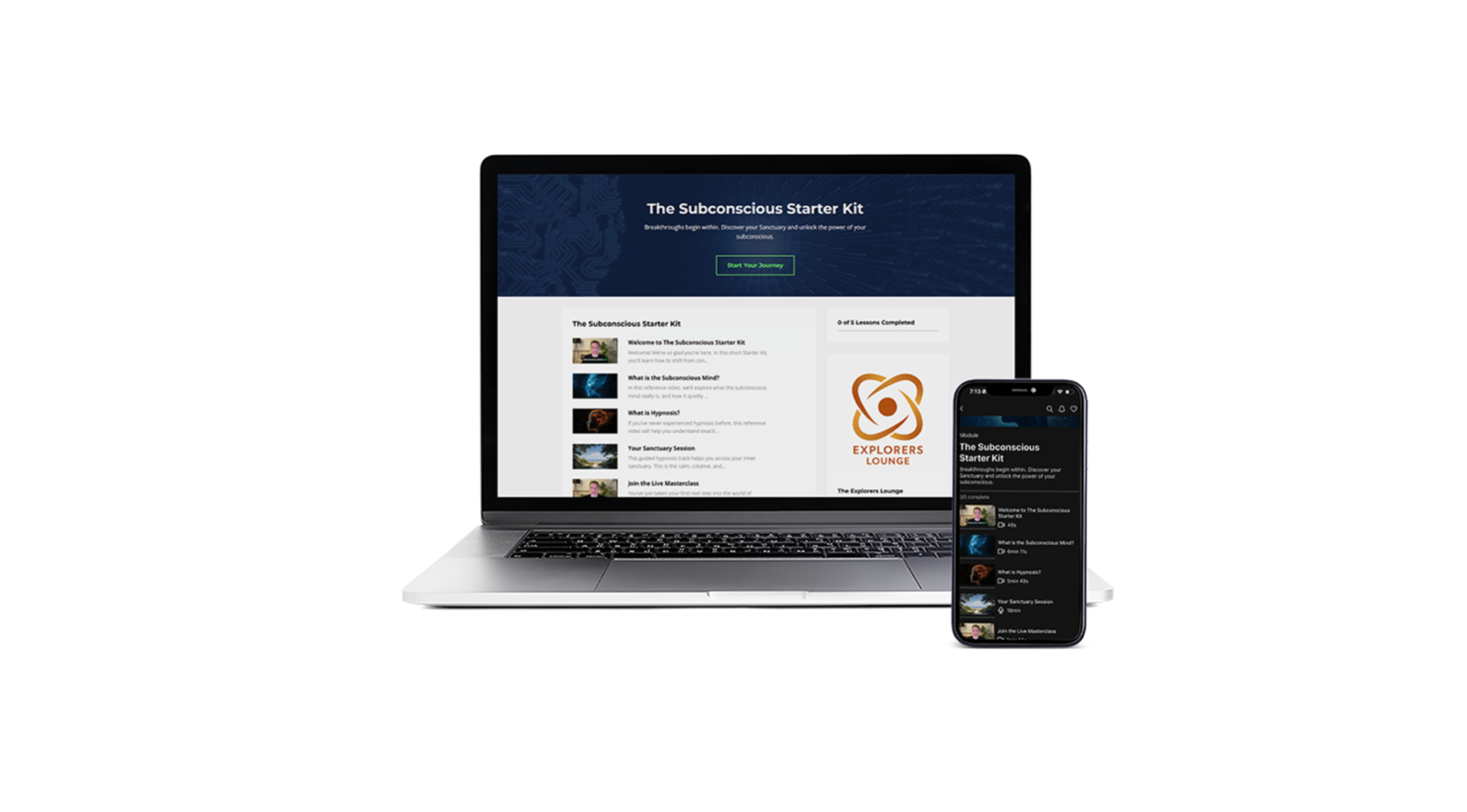
And if you’d like a structured way to experience the shift rather than just understand it intellectually, the Subconscious Starter Kit inside the Subconscious Academy app includes the Sanctuary Session — a guided experience designed to help your nervous system downshift and return to a calmer internal baseline.
Because this ultimately isn’t about productivity.
It’s about agency.
When you can consciously choose your attention again, you can consciously shape your life again.
Breakthroughs begin within.
Sources & Further Reading
- Smartphones and Cognition: A Review of Research Exploring Mobile Technology Habits and Cognitive Functioning
- Attention in our digital ecosystem: factors that drive media multitasking (2025)
- Schultz (2016), Dopamine reward prediction error coding
- EEG oscillatory correlates of meditation practice: systematic review and meta-analysis (2026)
Research & Further Reading
For readers who want to go deeper into the research behind these ideas:
- Smartphones and Cognition: A Review of Research Exploring the Links between Mobile Technology Habits and Cognitive Functioning
- Attentional Capture and Control
If you want to explore this idea further, you may also find Why Your Brain Is Addicted to Distraction (And How to Break Free) and Why You Only Take Action Under Pressure useful.
Start with the Free Starter Kit to better understand the patterns behind your resistance, build steadier internal alignment, and access our free live training.