How to Give Yourself Room to Learn AI

By Ryan Nichols
A folder full of saved tutorials can be a reassuring thing. You’ve found useful people to learn from. You’ve collected examples. When you have a little more time, you’ll sit down and try them.
But sometimes that collection grows while your experience stays much the same. Each new tutorial adds another possibility, and choosing where to begin becomes harder. You may start wondering how much preparation you need before you’re ready to do anything.
If that feels familiar, it’s worth looking at the conditions you’ve set for yourself. Do you need to understand the tool first? Know exactly how it will help? Be sure the time will be worthwhile? Giving yourself room to learn means allowing an attempt before all those questions have answers.
For the accompanying discussion, watch Why AI Feels Overwhelming (And How to Move Forward).
Notice the conditions attached to trying
“I’m happy to experiment” can come with a few unspoken qualifications.
As long as I don’t feel foolish. As long as I’m making visible progress. As long as I can explain why this was a good use of my time.
Those expectations are understandable. You have responsibilities, and there are plenty of things competing for your attention. But consider how much uncertainty an experiment actually has room for under those conditions.
Before you begin, try finishing this sentence: “I’ll feel that this was a waste of time if...”
Your answer might be practical. Perhaps you’re facing a deadline and genuinely need to use an approach you already trust. You can make that decision without drawing any larger conclusion about your ability to learn.
Or the answer might reveal a standard you hadn’t noticed: “If I still need help.” “If I don’t get it right.” “If someone else could have done it faster.”
That’s useful to recognize. You may have given yourself permission to open the tool while expecting yourself to behave like someone who already knows it.
This is one place an automatic pattern can become visible. An expectation you’ve carried for years can quietly set the terms for a new experience. If the standard always moves beyond what you’ve managed, you may also recognize the pattern explored in Why You’re So Hard on Yourself.
Choose something you can afford to leave unfinished
A first experiment is easier to approach when an important outcome isn’t depending on it.
Imagine asking an AI tool to help write an invitation to an imaginary neighborhood book swap. Nobody is waiting for the result. There’s no real address or personal information to include. You’re simply curious about what happens when you ask for help with a small piece of writing.
The first version sounds like an advertisement. It’s too enthusiastic, too long, and nothing like something you’d send.
You could stop at “That’s terrible.” Or you could get more specific about what bothers you.
“Make it sound like a friendly note to neighbors. Keep it under 80 words. Leave out the sales language.”
The next version may improve. It may still be awkward. Either way, you have something to look at: how did the response change when you explained what you wanted more clearly?
You don’t have to keep refining until the invitation is perfect. You can try a playful version, compare two approaches, or stop when your curiosity has run its course.
The point is to give yourself an experience where rough results are allowed to exist. You have room to notice them, respond to them, and see what happens next.
Your own experiment might involve a hobby, a fictional scenario, or a topic you already understand. Using non-confidential material keeps the exploration simple. Choose something you’re genuinely interested in, so curiosity has a chance to be part of the experience.
Describe the result before judging yourself
A disappointing result can quickly become a personal statement.
“This doesn’t sound right” becomes “I’m no good at this.”
But there’s more you can learn from describing the problem precisely. Is the answer too general? Did it miss an important condition? Does it contain something you know is inaccurate? Are you asking it to do something it may not handle well?
Those observations give you choices. You can clarify the request, check the answer, seek an example, or decide to leave it there.
A broad judgment about yourself gives you much less to work with.
In the book-swap example, noticing that the invitation sounds too promotional is already an act of judgment. You recognize a mismatch between the response and what you wanted. That knowledge matters, even while you’re learning how to communicate it to the tool.
You can bring your existing experience into the process. Being unfamiliar with the interface doesn’t prevent you from recognizing a useful idea, an implausible claim, or writing that doesn’t sound like you.
You’ll still need to check anything you intend to use. And you may discover that a particular tool is unreliable or more trouble than it’s worth for the task. That’s a legitimate conclusion too. Permission to explore includes permission to make a considered decision to stop.
Let learning count without turning it into another target
There’s no need to create a scorecard for every experiment. You can simply notice whether anything became clearer.
Perhaps you understand one limitation you didn’t understand before. Perhaps you asked a follow-up question instead of abandoning the first answer. Perhaps you found an approach you’d be curious to try again.
You might also notice something about your own response. Did you become impatient as soon as the result was imperfect? Did you feel embarrassed about needing an explanation? Could you let that feeling be there long enough to ask anyway?
These are useful things to recognize. They give you a more specific picture of what happens when you encounter something unfamiliar.
In Why Better Tools Haven’t Made Things Easier, I explore the hesitation that can remain even when practical obstacles are removed. Learning to notice your expectations adds another way to understand that experience.
You don’t need to turn curiosity into a new demand to improve yourself. Some days you’ll have the time and interest to explore. Other days you’ll need to get on with familiar work.
What you can reconsider is the requirement to feel ready before you begin, or to have something impressive to show before the experience is allowed to count.
Leave a little room for an unfinished attempt. You may find there’s more you’re willing to try.
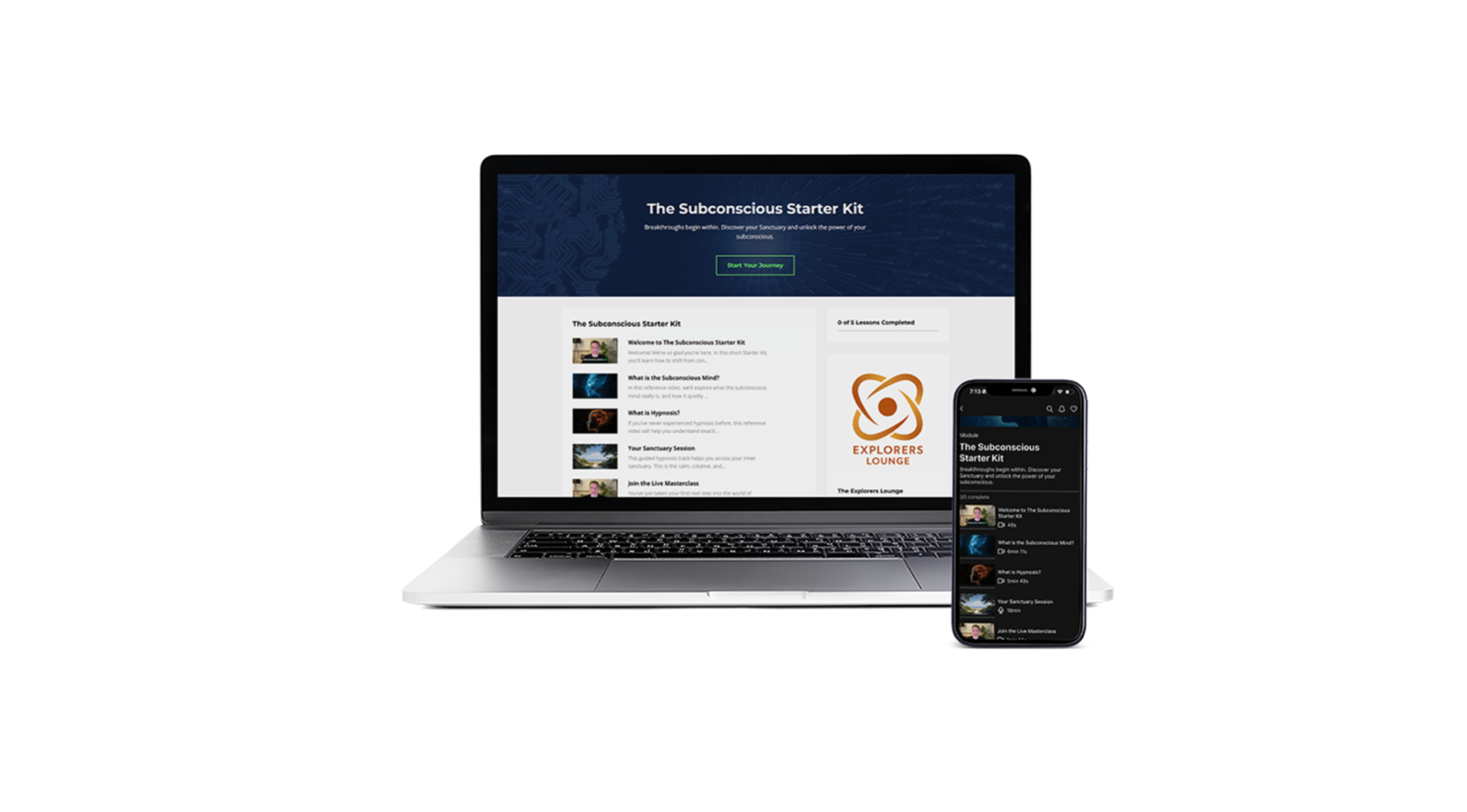
If you’d like to explore how learned beliefs and automatic patterns influence your life, the free Subconscious Starter Kit is a place to begin. It includes foundation videos and the Sanctuary Session guided audio. If you already have access, you can return to those resources as you notice the expectations you bring to learning and change.
Breakthroughs begin within.
Start with the Free Starter Kit to better understand the patterns behind your resistance, build steadier internal alignment, and access our free live training.