Why Better Tools Haven’t Made Things Easier

By Ryan Nichols
Key idea: Better tools remove external friction, but they cannot remove every source of hesitation. When execution gets easier, uncertainty, evaluation, procrastination, and emotional resistance can become more visible because there are fewer practical obstacles to blame.
Lately, I’ve been noticing something that doesn’t quite add up.
We have more tools, leverage, and capability than ever before. Work that used to require teams, budgets, and long timelines can now be done by a single person with a laptop. Execution is faster. Publishing is instant. Barriers that once slowed everything down have largely disappeared.
And yet, when I talk to entrepreneurs, builders, and creators, I hear the same thing again and again.
Things don’t feel easier.
In fact, for many people, they feel heavier.
Not more complex. Not more confusing. Just… harder to move through. There’s more hesitation. More friction around decisions. More moments of stalling right when momentum should be building.
At first glance, this doesn’t make sense. If friction has been removed from the outside, progress should follow naturally. That’s the promise most tools are built on. Reduce steps, reduce effort, reduce time, and results should accelerate.
But that isn’t what’s actually happening.
What I think we’re seeing instead is that as external friction disappears, internal friction becomes impossible to ignore.
When systems are clunky and slow, they give us cover. They explain why things aren’t moving yet. We’re still setting things up. We’re still preparing. We’re still waiting for the right moment.
But when the tools are in place and the path forward is obvious, those explanations quietly fall away. What’s left is a much more personal experience: our own uncertainty, hesitation, and internal readiness.
This is often mistaken for a motivation problem. People assume that if progress feels harder, they must not want it badly enough. Or that they need more discipline, more pressure, more accountability.
I don’t think that’s accurate.
Most of the people experiencing this aren’t unmotivated. They care deeply about what they’re building. They’ve already proven they can follow through. The issue isn’t desire. It’s what happens internally when speed, visibility, and consequence increase all at once.
Psychologically, this makes sense. Faster tools can also accelerate exposure: decisions become more immediate, publishing happens sooner, feedback arrives faster, and mistakes can feel more personal. For someone who finds uncertainty or evaluation difficult, removing logistical friction does not necessarily remove emotional friction.
So even though the task itself is easier, the emotional stakes feel higher.
That’s why hesitation often shows up right when things are going well. The plan is solid. The tools are ready. There’s nothing obviously in the way. And yet something slows you down. You refine instead of publish. You tweak instead of decide. You stay in preparation mode a little longer than you intended.
This isn’t failure. It’s feedback.
Better tools don’t cause the friction. They reveal it.
They show you where your internal capacity hasn’t quite caught up with your external leverage yet. And that’s not a flaw. It’s information about what needs attention.
Where most advice goes wrong is in how it responds to this moment. The default response is to push harder. To apply more pressure. To treat hesitation as something to overcome.
More pressure is not always the answer. In stressful contexts, coping resources can be depleted and difficult task-related emotions can become harder to tolerate, which can increase avoidance rather than reduce it.
Real progress is not just about removing practical obstacles. It is also about becoming better able to act while uncertainty, self-doubt, or discomfort are present.
That’s not a mindset shift. It’s not positive thinking. It’s a skill.
It starts by creating an internal environment where movement feels safe again.
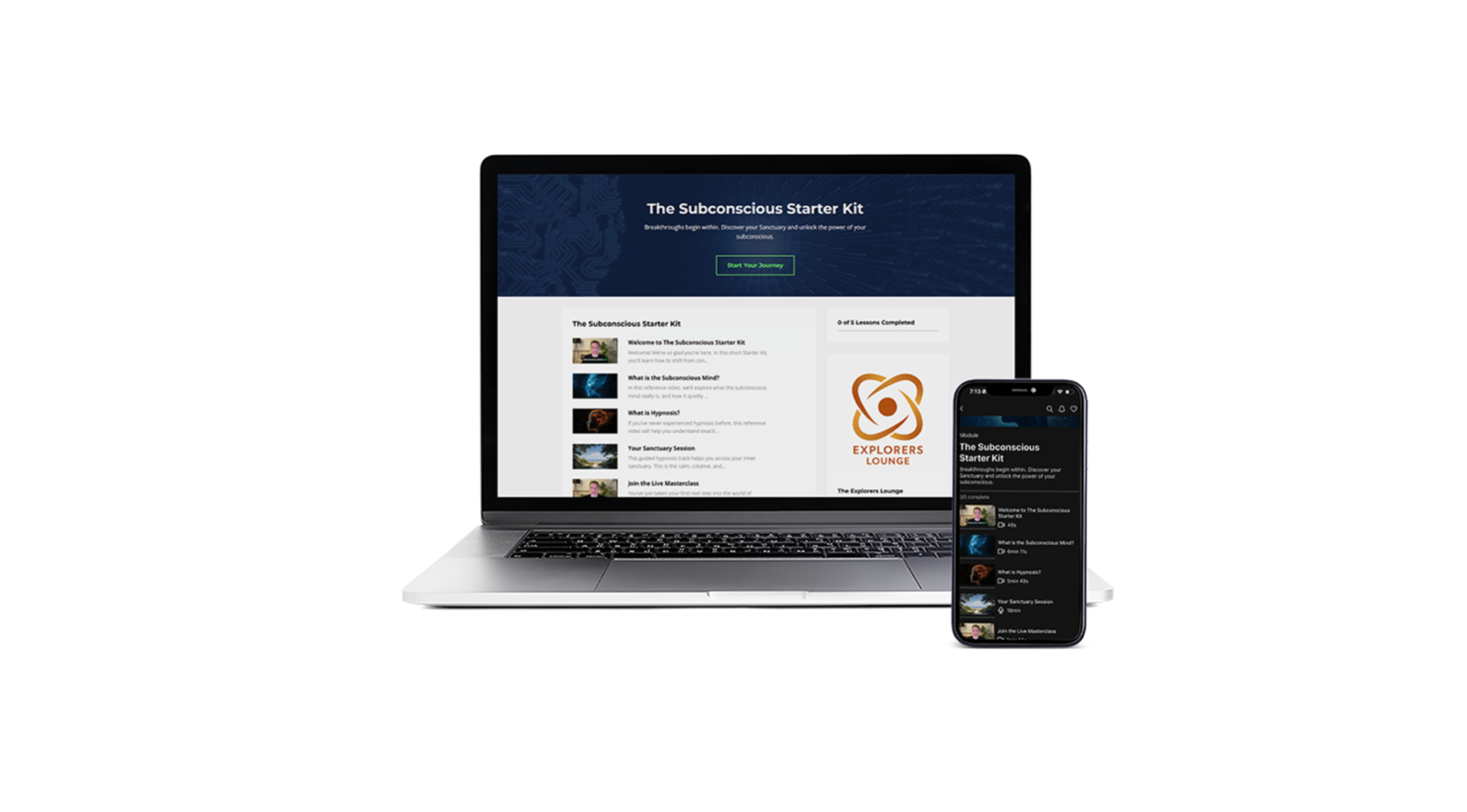
That’s why we built the Subconscious Starter Kit inside the Subconscious Academy app ( App Store or Google Play). Not to force change or convince anyone of anything, but to help people slow down enough to actually feel what’s happening underneath their patterns. The Sanctuary Session in the kit is designed to help settle the system, reduce internal noise, and reconnect with a calm, grounded internal state.
From there, clarity tends to emerge naturally. Momentum follows without being forced. Action becomes simpler not because the tools are better, but because there’s less internal conflict around using them.
Better tools change what’s possible.
But progress still depends on what your system is ready to embody.
That’s the conversation most productivity advice never has. And it’s one worth paying attention to.
Watch the full video version of this topic below or on Youtube.
Breakthroughs begin within.
Sources & Further Reading
- Intolerance of uncertainty: neural and psychophysiological correlates
- Procrastination and Stress: Why Context Matters
- Procrastination and negative emotions: systematic review and meta-analysis
If you want to explore this idea further, you may also find Why More Strategy Isn’t the Answer (And the App Designed to Help You Finally Follow Through) and The Hidden Reason You’re Always Busy but Still Stuck useful.
Start with the Free Starter Kit to better understand the patterns behind your resistance, build steadier internal alignment, and access our free live training.