The 3-Letter Part of Your Brain That Controls Your Life

By Ryan Nichols
Key idea: The Reticular Activating System helps regulate arousal and attention, but it is not a belief detector that literally “filters reality” according to your mindset. Your goals, expectations, memories, and learned patterns influence what captures your attention through a much broader set of brain systems.
Have you ever decided you wanted a certain car and then suddenly started seeing it everywhere?
The cars were there before. What changed was your attention.
That simple experience points toward something useful: your brain cannot give equal priority to everything around you. It has to select.
What Is the Reticular Activating System?
The Reticular Activating System, or RAS, is a network of brainstem circuits involved in wakefulness, arousal, attention, and the ability to focus.
It helps regulate whether the brain is alert and ready to respond. But it does not work alone, and it does not decide what is true or false based on your beliefs.
Attention emerges from interaction among many systems, including sensory processing, memory, goals, expectations, salience, and executive control.
So when people say, “Your RAS shows you what you believe,” that is a useful metaphor for selective attention, but it is not a literal description of the neuroscience.
Why You Start Noticing What Matters to You
Your brain is constantly prioritizing information.
Once something becomes relevant to a goal, it is more likely to capture your attention. That is why the car you are considering suddenly seems to be everywhere, or why you start noticing examples related to a business idea after you decide to pursue it.
The same principle can operate psychologically.
If you expect rejection, you may notice ambiguous signs of rejection more quickly. If you are looking for evidence that you are improving, you may begin noticing progress that previously passed without much attention.
This is not because the RAS is rewriting the outside world. It is because attention and interpretation are selective.
Where Beliefs Come In
Beliefs influence attention because they influence expectation.
If you have repeatedly learned that visibility leads to criticism, you may become highly sensitive to cues of judgment. If you have learned that taking risks leads to embarrassment, uncertainty may grab your attention more strongly than opportunity.
That process involves memory, prediction, emotion, and attention together.
This is one reason limiting beliefs can feel self-confirming. We tend to notice evidence that fits an existing expectation more readily than evidence we never learned to look for.
Can You “Reprogram” Your RAS?
Not in the simplistic sense of issuing a command to a single brain structure.
But you can train attention.
You can deliberately practice noticing different evidence, rehearse different responses, and create new experiences that update what feels important and expected.
Mental rehearsal. Imagery can influence emotion, expectation, and behavior. Research shows that mental imagery recruits some of the same perceptual systems used during actual perception, although imagination and reality are not identical in the brain.
Deliberate questions. Asking, “What did I do today that moved me forward?” directs attention toward evidence of progress that might otherwise be overlooked.
Behavioral evidence. Taking a small action and seeing that you can handle the result gives your brain more than an affirmation. It gives it experience.
Repetition. Attention becomes easier to direct toward patterns you repeatedly practice noticing.
The Takeaway
The RAS is important, but it is not a magical manifestation filter.
The more useful truth is that attention is selective, expectations shape what becomes salient, and experience can train what you notice.
That means you do have influence over the filter, just not by commanding one tiny part of your brain to create a new reality.
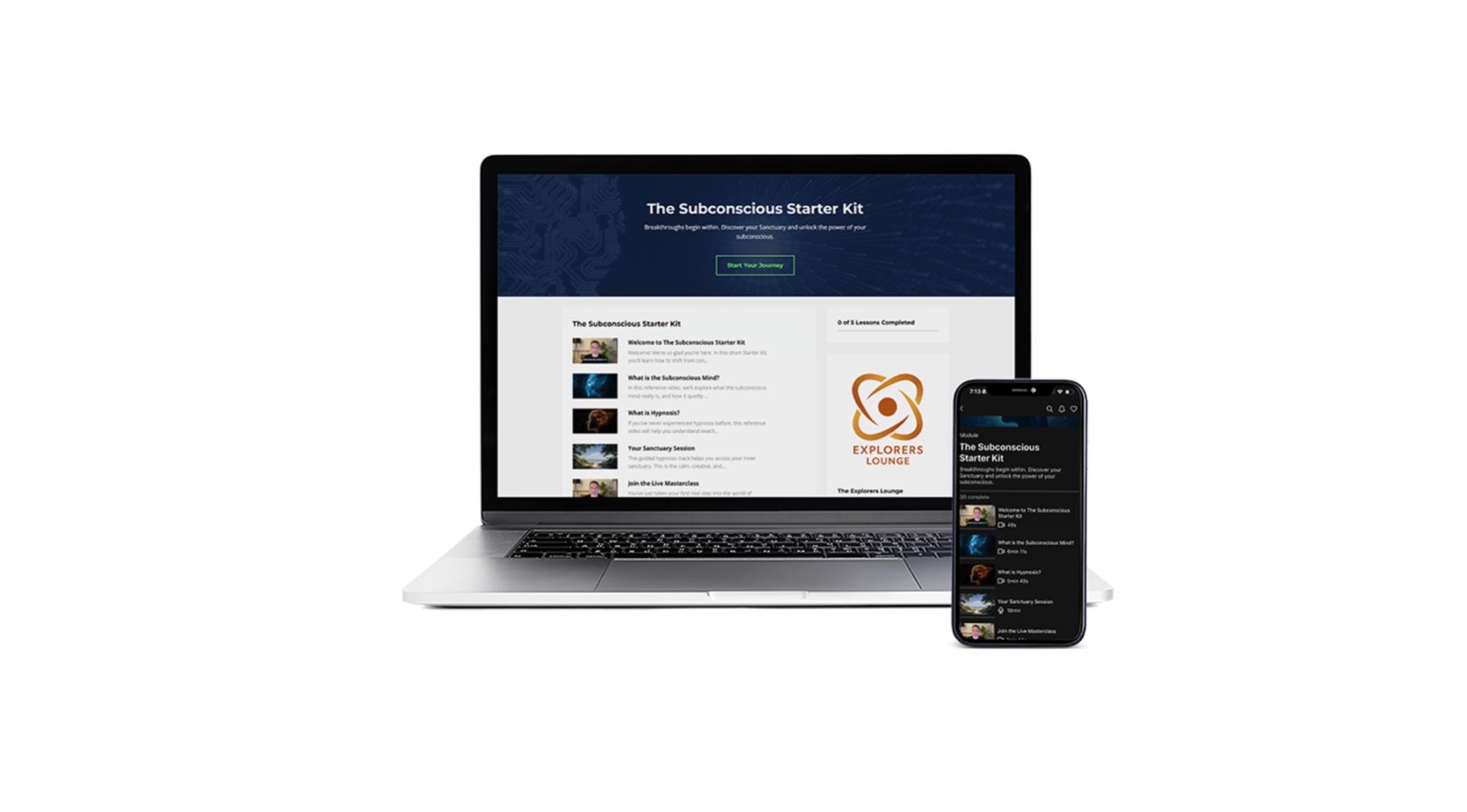
If you want to explore the deeper subconscious patterns shaping what you expect, notice, and act on, the free Subconscious Starter Kit is a good place to begin.
Sources & Further Reading
- NCBI Bookshelf: Neuroanatomy, Reticular Activating System
- Mental Imagery: Functional Mechanisms and Clinical Applications
- The critical role of mental imagery in human emotion
Research & Further Reading
For readers who want to go deeper into the research behind these ideas:
- The reticular activating system: a narrative review of discovery, evolving understanding, and relevance to current formulations of brain death
- The role of the LC-NE system in attention: From cells, to systems, to sensory-motor control
If you want to explore this idea further, you may also find Why Your Brain Believes Things That Aren’t True and The Life You Keep Rehearsing useful.
Start with the Free Starter Kit to better understand the patterns behind your resistance, build steadier internal alignment, and access our free live training.