Why Success Feels Unsafe (And How to Shift It)

By Ryan Nichols
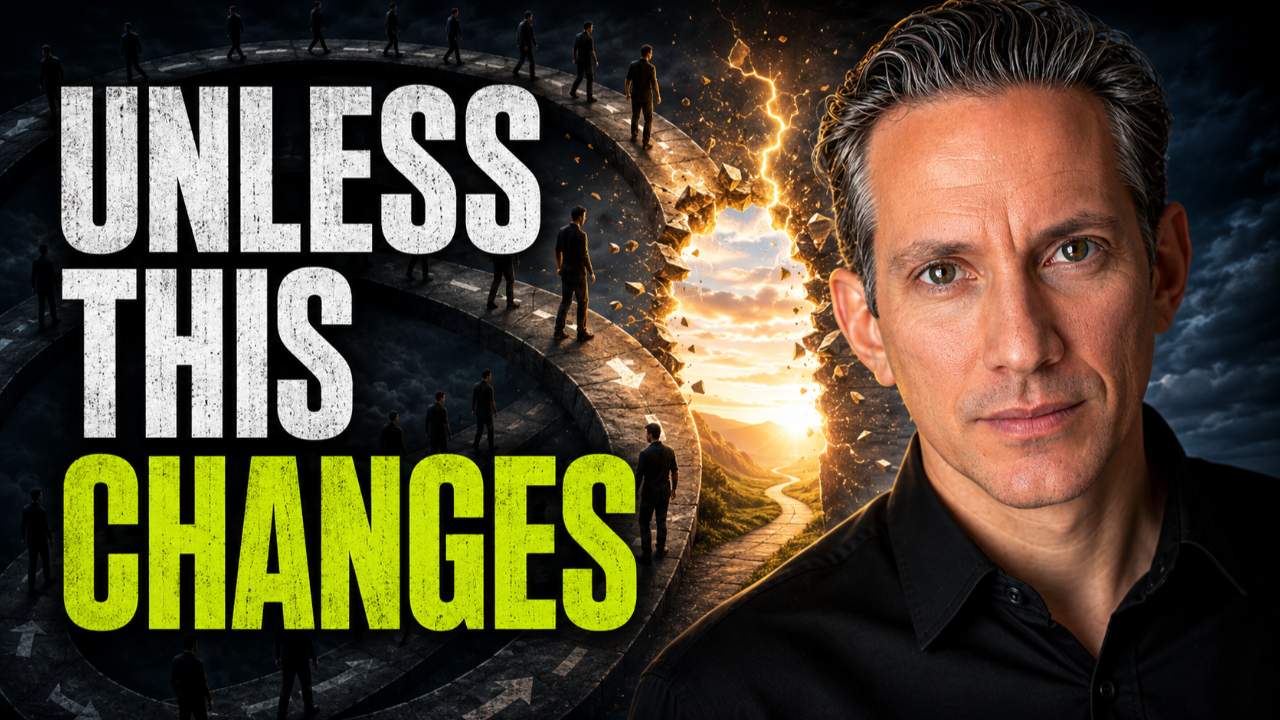
Key idea: Fear of success is not a single brain mechanism. For some people, growth brings more uncertainty, visibility, pressure, or social risk, and those conditions can activate stress and threat responses even when the goal itself is consciously desirable.
We talk endlessly about the fear of failure. It’s one of the most common explanations we reach for when progress stalls or momentum disappears.
But there’s a quieter, more uncomfortable truth that most people never consider.
For many, it’s not failure that feels threatening.
It’s success.
That idea can feel counterintuitive at first. Why would your mind resist the very thing you’ve been working toward? More freedom. More income. More visibility. More impact.
The answer lies in how the subconscious is designed.
Your subconscious does not measure outcomes by growth or achievement. It measures them by safety. Familiarity. Predictability.
Anything that represents a departure from what you already know, even something objectively positive, can register as a threat.
When success triggers protection
You can consciously want success with every fiber of your being. You can set goals, visualize outcomes, and plan your next moves carefully.
But if your subconscious associates success with exposure, judgment, pressure, exhaustion, or loss, it will quietly move to protect you.
That protection does not announce itself as fear.
It shows up as hesitation.
As perfectionism.
As distraction.
As the sense that you just need a little more clarity before you act.
From the outside, it looks like self-sabotage.
From the subconscious perspective, it is survival.
Why uncertainty can feel threatening
The brain is not simply designed to keep you small or preserve one fixed identity. But it is highly responsive to uncertainty, prediction, and perceived threat.
Research on intolerance of uncertainty shows that some people experience ambiguous or unpredictable situations as especially threatening, with measurable differences in neural and physiological responses to uncertainty. Growth can contain a lot of uncertainty: new expectations, more visibility, unfamiliar responsibility, social evaluation, and the possibility of loss.
That does not mean your nervous system “thinks success is dangerous.” It means that some of the conditions surrounding success can be interpreted as risky based on prior learning and current context.
When that happens, the response can include heightened arousal, narrowed attention, avoidance, or a stronger urge to retreat toward something more predictable.
A story about altitude
There is an old myth that captures this dynamic beautifully. In Greek mythology, Icarus escapes captivity using wings crafted from feathers and wax. His father warns him not to fly too high or too low. Too close to the sun, the wings will melt. Too close to the sea, they will become heavy.
Icarus, exhilarated by flight, rises higher and higher until the wax softens and he falls.
The story is often told as a cautionary tale about arrogance. But there is another layer that feels more relevant here.
It is not ambition that destroys us. It is our relationship with altitude.
Most people never reach the danger of flying too high because they never feel safe enough to leave the ground.
A more useful way to frame the problem is this: sometimes the obstacle is not whether a goal is possible. It is whether the conditions that come with achieving it feel familiar enough to tolerate.
Rewiring safety, not forcing change
The encouraging truth is that this response is not fixed. The subconscious can be retrained. Safety is not static. It is learned.
Real rewiring does not happen by pushing harder or overriding resistance. It happens by changing what the nervous system associates with growth.
The first step is noticing the pattern. Pay attention to what happens when things begin to work. When progress appears, when momentum builds, when opportunity knocks. Resistance at that moment is not evidence of weakness. It is information.
The second step is redefining safety. Instead of visualizing success only in terms of outcomes, begin to imagine how it feels internally. Calm. Grounded. Present. Capable. The subconscious responds to emotional experience, not abstract goals.
The third step is rehearsal through experience. Each time you stretch yourself, pause afterward. Breathe. Let your body register that nothing bad happened. That you are still here. That expansion did not lead to danger.
These moments accumulate. Over time, the nervous system learns that growth does not equal threat. It equals evolution.
You cannot expand while holding your breath. Growth requires the body to feel included, not overruled.
When success becomes familiar
When the subconscious finally feels safe, something fundamental shifts. Effort softens. Resistance quiets. Action feels more natural.
Success stops feeling like something you have to force or defend. It starts to feel like a place you belong.
If this resonates, I invite you to watch the full video below or on YouTube, where I explore this dynamic in more depth.
You can also take the free Mind-Control Assessment to uncover which subconscious patterns are shaping your relationship with success and where to begin rewiring.
And if you want to go further, you can download the Subconscious Academy app ( App Store or Google Play) and access the free Subconscious Starter Kit. Inside, you will find a guided hypnosis session and short videos designed to help you work with your subconscious more intentionally.
Because when your subconscious feels safe, success no longer feels like a threat.
It feels like home.
Breakthroughs Begin Within.
Sources & Further Reading
- Tanovic, Gee & Joormann (2018), Intolerance of uncertainty: neural and psychophysiological correlates
- Anxiety and the neurobiology of temporally uncertain threat anticipation
- Neural and psychophysiological markers of intolerance of uncertainty (2023)
If you want to explore this idea further, you may also find Why “Imposter Syndrome” Shows Up When Things Are Going Well and The Ceiling You Can't See useful.
Start with the Free Starter Kit to better understand the patterns behind your resistance, build steadier internal alignment, and access our free live training.