Why Most New Year’s Resolutions Fail — And How to Rewire Your Mind to Keep Yours
By Ryan Nichols
Key idea: New Year’s resolutions usually fail for more than one reason. A goal is not a behavior, motivation fluctuates, and old habits remain strongly tied to familiar cues. Lasting change is more likely when a clear goal is translated into repeatable actions that are practiced in stable contexts.
January makes change feel clean.
There is a new calendar, a new goal, and for a few days a new level of motivation.
Then ordinary life returns.
The schedule gets busy. The emotional charge fades. The old cue appears, and the old response is suddenly easier than the new one.
That is not proof that you lacked commitment. It is what happens when a goal exists before a reliable behavioral system does.
A Goal Is Not Yet a Habit
“Get fit.” “Write the book.” “Grow the business.” “Stop procrastinating.”
Those are directions, not behaviors.
Goal-setting research shows that goals can improve behavior, particularly when they are sufficiently challenging and concrete. But the goal still has to be translated into actions that can actually occur in everyday life.
“Exercise more” becomes “walk for twenty minutes after lunch on Monday, Wednesday, and Friday.”
“Create more content” becomes “draft one video outline every Tuesday morning.”
The more specific the behavior, the easier it is to repeat.
Why Motivation Is Not Enough
Motivation is useful, but it is variable.
When a behavior depends entirely on feeling inspired, every difficult day becomes a referendum on the goal.
Habits solve a different problem. Through repetition, a behavior becomes associated with a recurring context, so initiating it requires less deliberate negotiation.
That process takes time. There is no universal number of days after which every habit becomes automatic.
The more useful question is whether the behavior is being repeated consistently enough in a stable context to become easier.
Why Old Patterns Come Back
Old habits do not disappear simply because you made a new resolution.
The old cue is still there.
The familiar response is still well-practiced.
And when you are tired, rushed, stressed, or distracted, the behavior that requires the least effort often wins.
That is why relapse should not automatically be interpreted as failure. It is information about which cues, environments, and emotional states are still pulling the old pattern forward.
Build a Resolution That Can Survive February
Make the behavior observable. Decide what you will actually do, not only what outcome you want.
Choose a recurring cue. Attach the action to a time, place, or existing routine.
Make the first version easy enough to repeat. You can increase difficulty later. Early consistency gives the behavior a chance to become familiar.
Track repetitions, not identity judgments. Missing a day does not mean “I’m inconsistent.” It means one repetition did not happen.
Restart quickly. A lapse becomes a pattern only when it keeps going.
Where Subconscious Work Fits
I use the phrase subconscious rewiring for work that targets automatic patterns rather than relying only on conscious intention.
That can include habits, learned associations, imagery, expectations, emotional responses, and the meanings attached to behavior.
It does not replace practical behavior change. It complements it.
The goal is to make the new response easier to access repeatedly, not to wait for one perfect internal breakthrough.
The Takeaway
A resolution becomes real when it has somewhere to live in your day.
The question is not only, “What do I want this year?”
It is, “What will I repeatedly do when the calendar stops feeling new?”
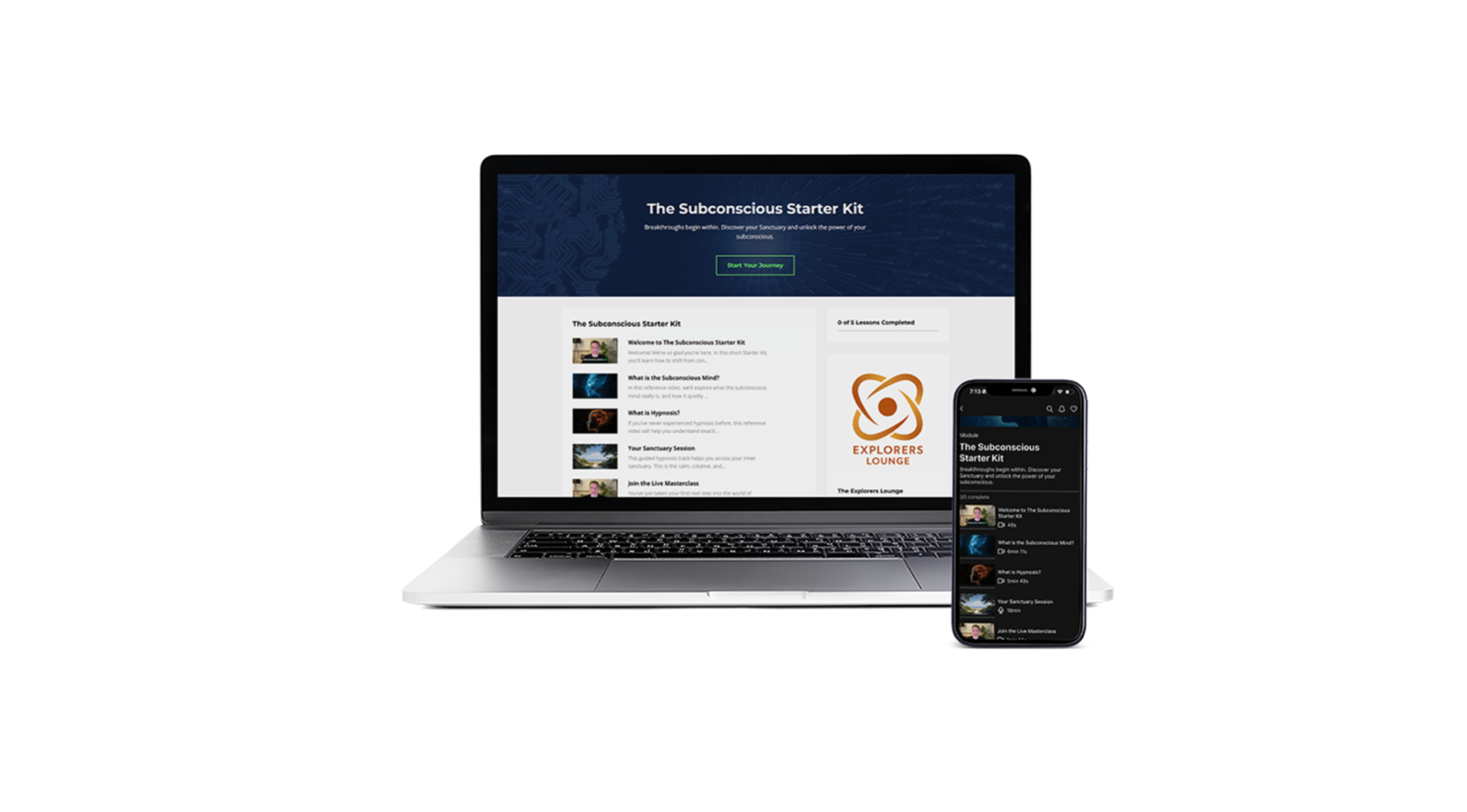
If you want a guided introduction to the automatic patterns that can affect follow-through, the free Subconscious Starter Kit includes foundational lessons and the Sanctuary Session guided hypnosis experience.
Sources & Further Reading
- Epton et al. (2017), Unique effects of setting goals on behavior change
- Wood & Rünger (2016), Psychology of Habit
- Context stability in habit building increases automaticity and goal attainment
If you want to explore this idea further, you may also find The Secret to Sticking With It and Your Next 6 Months Will Look Like Your Last 6 Unless This Changes useful.
Start with the Free Starter Kit to better understand the patterns behind your resistance, build steadier internal alignment, and access our free live training.