The Real Reason You Keep Fighting Yourself

By Ryan Nichols
Key idea: “Parts” are a useful therapeutic way of describing conflicting motives, emotional states, and learned protective responses. They should not be understood as literal separate personalities or discrete brain modules.
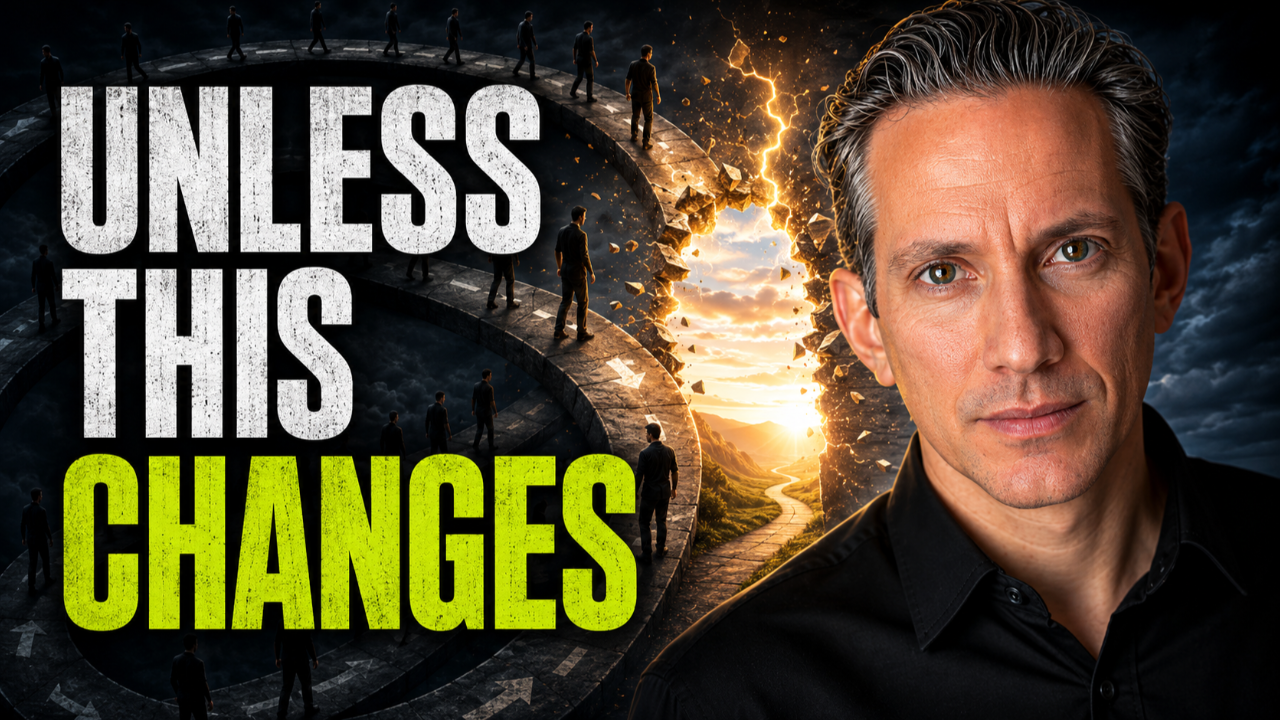
There’s a strange kind of exhaustion that comes from fighting yourself.
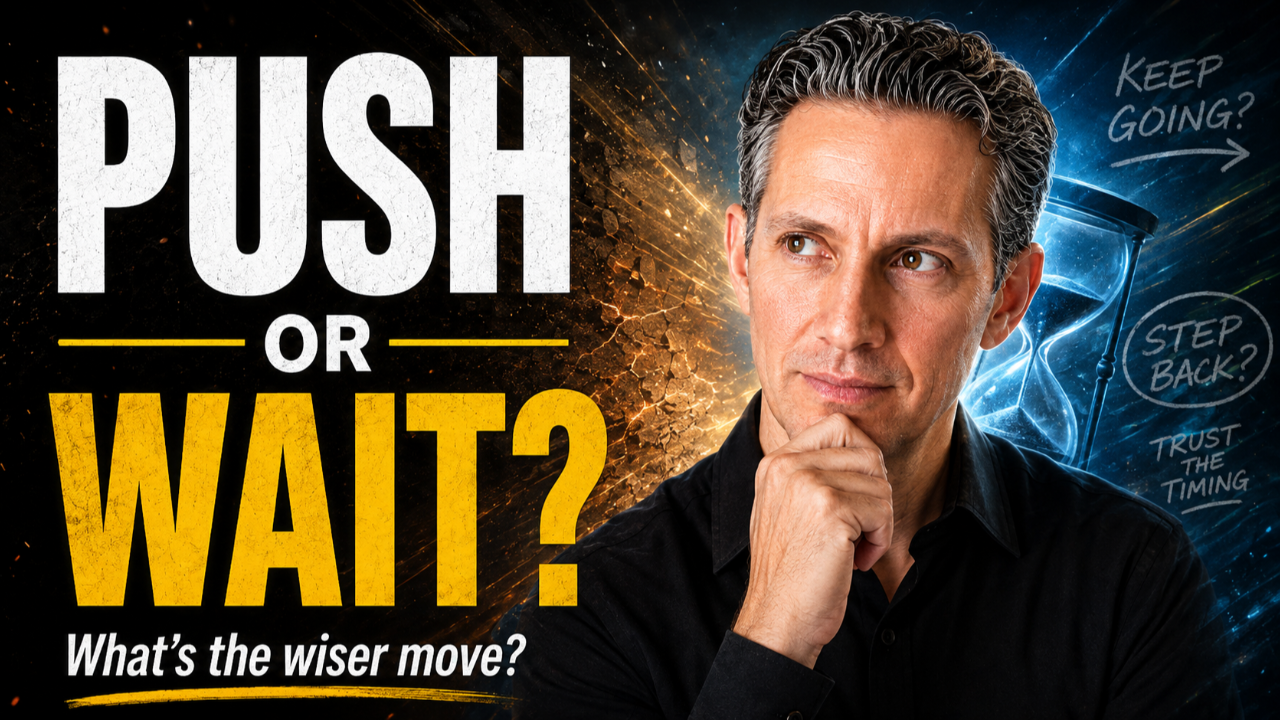
It’s different from ordinary tiredness. Ordinary tiredness comes from doing too much. This kind comes from being pulled in two directions at once. Part of you wants to move forward, and part of you refuses. Part of you wants discipline, and part of you wants relief. Part of you wants to be visible, honest, committed, courageous, or free, and another part keeps reaching for the familiar, the comfortable, the hidden, the safe.
From the outside, this often gets called self-sabotage. And sometimes that word is useful. It names the frustration of watching yourself interfere with something you genuinely want. But it can also be too blunt. It makes the pattern sound like stupidity or weakness, as if some defective part of you is irrationally trying to ruin your life.
I don’t think that’s usually the full story.
Much of what we call self-sabotage may be better understood as inner conflict. Not a failure of character, but a conflict between different parts of the system, each trying to serve a purpose.
This idea is not new. Different traditions have described it in different ways. Hypnotherapy has long worked with “parts” of the self. Ego-state therapy explores the idea that different states or parts of personality can carry different needs, memories, fears, and roles. Internal Family Systems is built around the idea that we contain parts that often try to protect us. Gestalt therapy is known for techniques like chair work, where a person can enter into dialogue with different aspects of themselves. Even in neuroscience, thinkers like David Eagleman have described the brain as a kind of “team of rivals,” with competing systems influencing behavior.
Different language. Different models. Same recognizable human experience.
You can want two things at the same time.
And both can feel real.
That is why change is often so much harder than ordinary advice makes it sound. It’s not always that you don’t know what to do. Very often, you do know. You know the conversation you need to have. You know the boundary you need to set. You know the call you need to make. You know the offer you need to publish. You know the workout would help. You know the scrolling isn’t helping. You know the habit is costing you.
And yet knowing does not always create movement.
Because another part of you may be voting for something else.
The part that wants the couch may not simply be lazy. It may be trying to protect rest, recovery, comfort, or relief. The part that avoids the sales call may be trying to protect you from rejection. The part that procrastinates may be trying to protect you from the shame of failing. The part that overthinks may be trying to protect you from making a mistake. The part that hides may be trying to protect you from being judged, misunderstood, or exposed.
That doesn’t mean those parts are always wise. It doesn’t mean they should run the whole system. A protective strategy can still be outdated, costly, or completely misaligned with the life you’re trying to build.
But it changes something when you stop treating the resistant part as an enemy.
Because if you believe one part of you is bad, weak, or broken, your instinct will be to crush it. You’ll shame it, overpower it, suppress it, or try to drag it into submission. And sometimes that works briefly. The disciplined part takes over. The motivated part wins. You go to the gym for a week. You stop scrolling for a few days. You force the routine. You push through.
But suppression is rarely the same as integration.
The ignored part doesn’t disappear. It waits. And eventually, it often comes back with more force.
That’s how people end up in the familiar cycle of discipline and collapse. They push hard, override the resistance, feel proud for a while, then suddenly snap back. One skipped workout becomes three days on the couch. One small avoidance becomes a spiral. One moment of “I deserve a break” turns into a full retreat from the goal.
It’s tempting to interpret that as weakness. But another interpretation may be more useful: a part of you that was never heard eventually grabbed the wheel.
This is the problem with trying to win the tug-of-war.
Willpower tries to make one part stronger than the other. It says, “Pull harder.” Subconscious work asks a different question: “What if these parts don’t need to keep pulling against each other?”
That’s the deeper possibility.
What if the gym part and the couch part are not truly enemies? What if one is protecting health, energy, confidence, and self-respect, while the other is protecting recovery, ease, and the right not to live under constant pressure? At the surface, they disagree. One says move. The other says stop. But at the highest level, both may want some version of wellbeing.
They both want you to be okay.
They just disagree on the strategy.
That is the beginning of integration. Not one part winning and the other losing. Not the “disciplined” part dragging the rest of you through life. Not the old motivational fantasy of destroying the weak self and replacing it with the new self.
Something more mature is possible.
The parts can start working together.
One team, one dream.
Yes, it’s a little cheesy. But the point matters. If your internal system is divided, every meaningful goal becomes heavier. You are not just doing the task. You are dragging an internal argument behind you. You are trying to move forward while another part of you has its foot on the brake. That takes energy. It creates frustration. It turns ordinary action into an inner battle.
And this is where conscious insight often reaches its limit.
Talk-based reflection can be deeply useful. It can help you name the pattern, understand the story, and recognize the competing needs inside you. That matters. But many people already have a surprising amount of insight. They know why they procrastinate. They know they fear judgment. They know they overwork to feel safe. They know their inner critic is trying, in some distorted way, to prevent humiliation or failure.
And still, the pattern continues.
Because the part that resists change is not always waiting for a better explanation.
Often, it is waiting for a new experience of safety.
That is why subconscious work becomes so important. The deeper system does not respond only to logic. It responds to imagery, emotion, repetition, association, felt experience, and identity. It responds to what feels safe, not just what sounds reasonable. A person can consciously know, “I’m safe to be seen,” and still have a deeper part react as though visibility is dangerous. A person can know rest is healthy and still feel guilty the moment they slow down. A person can know a fear is outdated and still feel the body brace as though the threat were current.
That gap is not solved by scolding yourself.
It is solved by creating a different relationship with the part that is pulling back.
In parts therapy, one of the most powerful shifts is re-tasking. A part that has been labeled as “procrastination” may actually become understood as a burnout-prevention part. An inner critic may become a standards advisor. An avoidance part may become a risk assessor. A fearful part may become a safety consultant. The couch part may become a recovery guardian.
This isn’t wordplay for its own sake. The label matters because the label changes the relationship.
If I call a part of myself “lazy,” I’m likely to attack it. If I recognize that the same part may be trying to protect recovery, I can begin to work with it. I can still challenge the strategy. I don’t have to let it run my life. But I no longer need to treat it as an enemy.
That is a completely different internal posture.
The goal is not to eliminate the part that resists change. The goal is to understand what it is protecting, update the strategy, and give it a healthier role.
A burnout-prevention part does not need to stop you from building the business. It can help you build the business sustainably. A risk-assessor part does not need to stop you from publishing. It can help you prepare thoughtfully without hiding forever. A standards advisor does not need to crush you with perfectionism. It can help you improve the work after you have actually created it.
The old role says: “I protect you by stopping you.”
The updated role says: “I protect you by helping you move wisely.”
That is the difference.
And it gives people a practical starting point.
The next time you notice yourself fighting yourself, stop calling the resistant part bad. Ask a better question: What might this part of me be trying to protect?
Then name the conflict. There’s a part of me that wants to move forward, and a part of me that wants to hide. There’s a part of me that wants to rest, and a part of me that feels guilty slowing down. There’s a part of me that wants to grow, and a part of me that wants life to stay familiar.
Then look for the positive intent. What does each part want for you? The action part may want confidence, freedom, pride, and growth. The resistant part may want safety, relief, stability, or protection.
Then look for the shared goal. Usually, at a deeper level, the parts are not as opposed as they first appear. They may both want you to feel safe, okay, whole, respected, healthy, or free. They are simply using very different methods.
And finally, create a small agreement. Not an ultimatum. Not an all-or-nothing demand. An agreement.
“We’re going to work out for 20 minutes, and we’re not going to use exercise as punishment.”
“We’re going to publish the video, and then we’re not going to obsessively check reactions for the next two hours.”
“We’re going to make the call, and afterward we’ll take a real break.”
This is not full integration by itself. It is a beginning. A way of interrupting the war long enough to create a new internal conversation.
The deeper work is helping those parts feel safe enough to shift at the subconscious level, where the old associations, fears, and identity patterns actually live. That is what creates lasting change. Not just understanding the tug-of-war, but helping the parts stop pulling against each other.
Because the part of you that resists change may not be the enemy.
It may be scared.
It may be outdated.
It may be overprotective.
It may be using a strategy that once made sense, but no longer serves the person you are becoming.
And if you can understand what it is protecting, you can begin to give it a better role.
That is when change stops feeling like self-violence.
It becomes alignment.
I go deeper into this in the video, including the idea of positive intent, why suppression often leads to rebound, how parts therapy works with inner conflict, and why subconscious work is so important for lasting integration.
Watch the full video below or on Youtube.
And if this resonates, the Subconscious Starter Kit is a strong next step. It includes a free training to help you better understand the hidden patterns behind avoidance, self-sabotage, stress, and inner conflict, along with foundational videos on the subconscious mind and hypnosis. It also includes The Sanctuary Session, a guided hypnosis audio designed to help you settle your system and reconnect with a calmer internal state.
Because the goal is not to crush the part of you that resists change.
The goal is to understand what it is protecting, help it feel safe enough to shift, and bring more of you onto the same team.
Breakthroughs begin within.
Sources & Further Reading
- Randomized trial of an Internal Family Systems-based group treatment for PTSD (2026)
- Feasibility and acceptability study of an Internal Family Systems-based PTSD program
If you want to explore this idea further, you may also find You’re Living by Rules You Never Chose and The Old You Is Still Running Your Life useful.
Start with the Free Starter Kit to better understand the patterns behind your resistance, build steadier internal alignment, and access our free live training.