The Old You Is Still Running Your Life

By Ryan Nichols
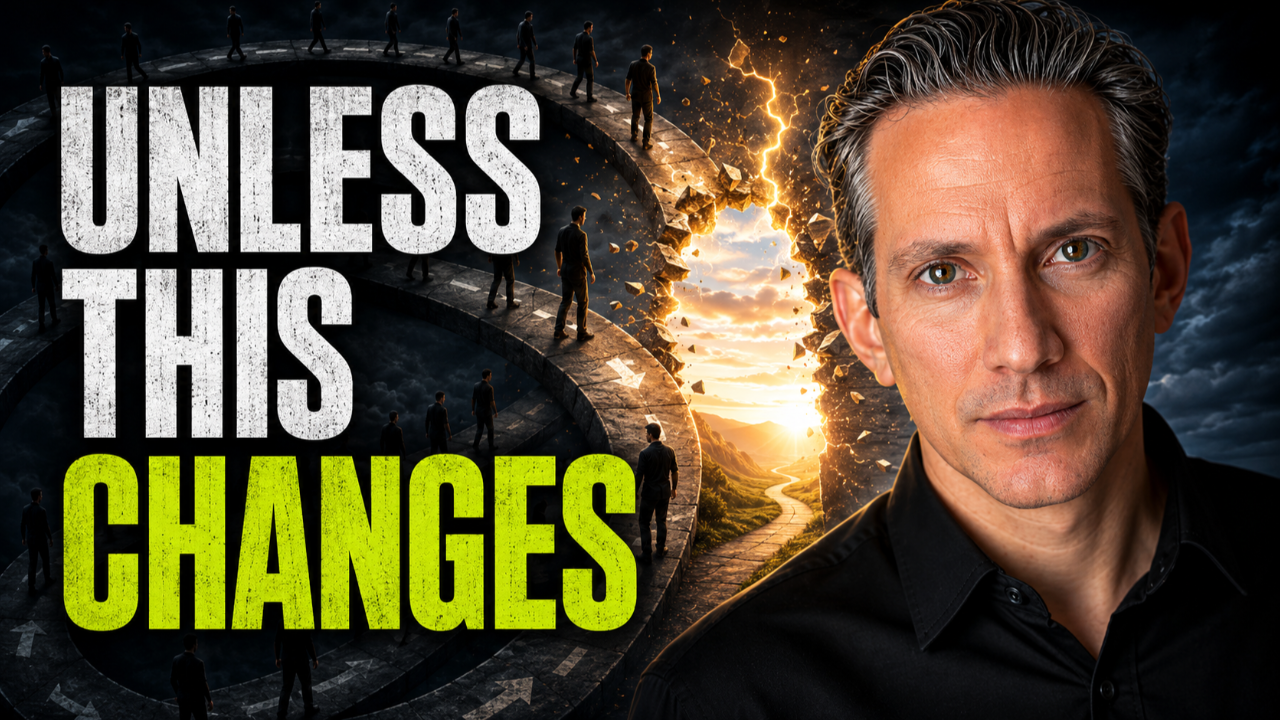
Key idea: Insight does not automatically change an old pattern. Habits, expectations, and identity-related behaviors can continue because they have been repeatedly practiced in familiar contexts, even after you consciously decide to change.
Have you ever tried to change your life, felt genuinely ready, and then somehow ended up right back in the same pattern?
Maybe you promised yourself you were finally going to be consistent. You were going to stop overthinking. You were going to launch the thing, speak up, set the boundary, follow through, or stop shrinking in the places where you know you’ve outgrown yourself.
And for a while, it feels real.
There’s a moment where you can almost see the new version of your life. You understand the pattern. You feel motivated. You make a plan. You tell yourself, “This time, I’m actually doing it.”
Then, slowly, something starts to pull you back.
Not dramatically. Not all at once. It’s usually quieter than that.
You delay one thing. You avoid one conversation. You start second-guessing something you were clear about a few days ago. You return to the familiar emotional state, the familiar explanation, the familiar version of yourself.
And then comes the frustration.
Why am I doing this again?
I know better.
I’ve worked on this.
I thought I had changed.
That’s the part most people misunderstand. They assume that if they understand the pattern, they should automatically be free of it. But insight and identity are not the same thing. You can understand something consciously while still being pulled by a deeper version of yourself that your subconscious still recognizes as safe.
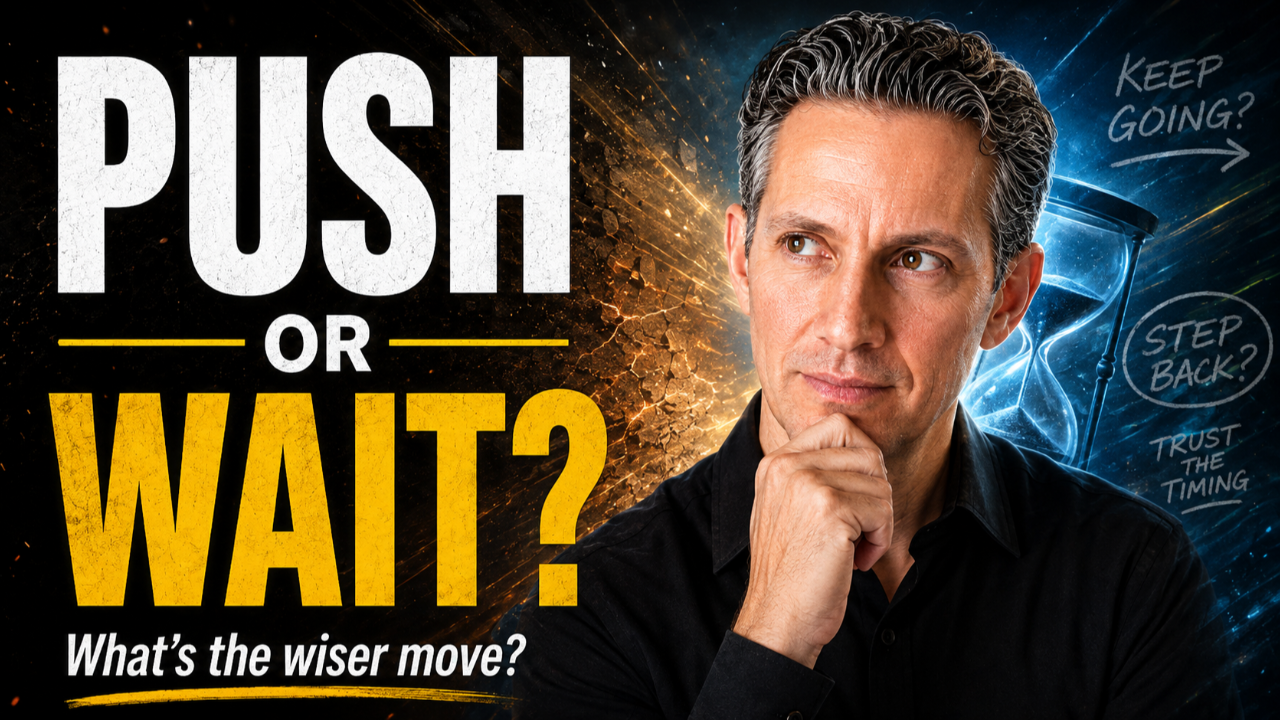
That’s what I explore in this video.
You can watch the full video below, or open it directly on YouTube.
Why the Old You Still Has So Much Influence
The “old you” isn’t just a past version of your personality. It’s not just the younger you, or the less confident you, or the version of you that made certain mistakes.
The old you is a whole inner system.
It’s made of emotional habits, expectations, beliefs, familiar reactions, protective strategies, and repeated ways of seeing yourself. It’s the version of you that learned how to survive, belong, avoid pain, manage uncertainty, and get through life.
At some point, that version of you may have made a lot of sense.
Maybe you learned to stay quiet because speaking up created conflict. Maybe you learned to overthink because making the wrong choice felt dangerous. Maybe you learned to people-please because approval felt like safety. Maybe you learned to hold yourself back because being seen came with judgment, pressure, or rejection.
Those strategies may have helped you then.
But the problem is that the subconscious does not automatically update just because your life has changed. It tends to keep using the emotional instructions it already knows.
So even when you consciously want a bigger, freer, more aligned life, a deeper part of you may still be asking, “Is this safe?”
And often, the old version of you still feels safer than the new one.
Familiar Can Feel Safer Than Better
One of the strangest things about personal change is that the better option does not always feel better at first.
Confidence might be better than self-doubt, but self-doubt may feel more familiar.
Visibility might be better than hiding, but hiding may feel safer.
Following through might be better than delaying, but delaying may protect you from judgment, disappointment, or the pressure of actually succeeding.
That’s why people can want something deeply and still resist it.
The conscious mind is focused on the life you say you want. The subconscious is often focused on the identity that has already been rehearsed.
It knows the old emotional world. It knows how to survive there. It knows what to expect.
The new life may be healthier. It may be more fulfilling. It may be more honest. But to the subconscious, new can register as uncertain. And uncertainty can feel like danger, even when nothing is actually wrong.
This is one of the reasons motivation fades.
Motivation can make change feel exciting for a little while. It can give you energy, vision, and momentum. But when the new behavior starts to challenge an old identity, the deeper system often pushes back.
You start feeling doubt.
You lose energy.
You suddenly need more time.
You decide to rethink the plan.
You tell yourself you’ll come back to it later.
On the surface, it looks like procrastination or inconsistency. Underneath, it may be an old identity trying to keep you inside familiar emotional territory.
The Old You Is Usually Trying to Protect You
It’s easy to get angry at the old pattern. Most people do.
They shame themselves for avoiding, shrinking, freezing, overthinking, or repeating the same cycle again. They treat the old self like an enemy that needs to be conquered.
But the old you probably formed for a reason.
That version of you may have been trying to protect you from rejection, conflict, failure, disappointment, judgment, or emotional overwhelm. It may have learned that staying small was safer than being seen. It may have learned that pleasing people was safer than being honest. It may have learned that not trying was safer than trying and failing.
That doesn’t mean the old pattern is still helping you.
It may be limiting you now. It may be costing you opportunities, confidence, intimacy, money, creativity, or peace.
But underneath the pattern, there is often a protective logic.
When you can see that, you stop treating yourself like a problem to fix. You begin to understand that some part of you is still operating from an outdated map of safety.
That shift matters, because shame usually strengthens the old pattern. It creates more pressure, more inner conflict, and more emotional threat. The subconscious does not tend to open when it feels attacked.
Lasting change begins when you can look at the old version of yourself with enough honesty to see the cost, and enough compassion to understand why it formed.
Real Change Has to Reach Identity
Most people try to change at the level of behavior.
They try to wake up earlier, post more consistently, make better decisions, stop scrolling, set boundaries, or stick to the plan.
Those things can help, but behavior is often the outer layer.
The deeper question is: Who do you believe you are allowed to become?
If you have always seen yourself as the person who struggles to finish things, becoming consistent may feel strangely unfamiliar. If you have always been the one who keeps the peace, setting a boundary may feel wrong even when it is healthy. If you have always been behind the scenes, being visible may feel exposed. If stress has been your normal state for years, calm may not feel like peace at first. It may feel like something is missing.
This is why identity-level change can feel so uncomfortable.
You are not just doing something different. You are stepping outside the emotional boundaries of who you have known yourself to be.
And that can trigger resistance.
Not because the new version of you is wrong, but because your system has not yet learned that this new version is safe.
The New You Has to Become Familiar
There is a reason people often return to old patterns after a breakthrough.
A breakthrough can show you what is possible. It can create a powerful opening. It can help you see your life from a different angle.
But if the new pattern does not become familiar to the subconscious, the old pattern often comes back.
That’s why real change usually requires more than insight. It requires repetition, emotional safety, and repeated experiences of the new identity feeling believable.
Your subconscious needs evidence.
It needs to experience that it is safe to speak.
Safe to be visible.
Safe to succeed.
Not as a concept. As an internal experience.
That is where deeper subconscious work becomes so important. You are not just trying to force new behavior over an old identity. You are helping your system update what feels normal.
Over time, the new version of you has to stop feeling like a performance.
It has to start feeling like home.
A Question Worth Sitting With
If you keep slipping back into an old version of yourself, try asking a different question.
Instead of asking, “What’s wrong with me?” ask:
What part of the old me still feels safer than the new version I’m trying to become?
That question can reveal a lot.
Maybe staying quiet feels safer than being honest. Maybe delaying feels safer than being judged. Maybe staying busy feels safer than being still. Maybe staying small feels safer than being fully seen.
Once you understand what kind of safety the old pattern has been providing, the pattern becomes easier to work with.
You no longer have to see it as random self-sabotage. You can begin to see it as an outdated form of protection.
And once you see what the old you has been protecting, you can begin showing your subconscious that a different way is safe now.
You Are Not Stuck With the Old You
The old you may still be running parts of your life, but that does not mean you are trapped there.
It means some part of your subconscious has not fully updated yet.
It still believes the old pattern is safer.
It still expects the old outcome.
It still identifies with the old story.
But that can change.
You do not become the new version of yourself by hating the old one. You become the new version by helping your subconscious feel safe enough to release the old identity and practice a new one.
A different response can become familiar.
A different pattern can become natural.
A different version of you can begin to feel emotionally believable.
And when that happens, change stops feeling like something you have to constantly force.
It begins to feel like who you are becoming.
Start Working With the Deeper Pattern
If this resonates, I created a free Subconscious Starter Kit to help you begin understanding how deeper subconscious patterns shape your thoughts, emotions, behavior, and follow-through.
Inside, you’ll get a simple introduction to this deeper kind of work, including the Sanctuary Session guided audio.
It’s a place to begin working with the part of you that actually runs the pattern.
Breakthroughs Begin Within.
Sources & Further Reading
- Wood & Rünger (2016), Psychology of Habit
- Habits and Goals in Human Behavior: Separate but Interacting Systems
- Measuring context-response associations that drive habits
If you want to explore this idea further, you may also find The Story You’re Living Inside and Why Success Feels Unsafe (And How to Shift It) useful.
Start with the Free Starter Kit to better understand the patterns behind your resistance, build steadier internal alignment, and access our free live training.