The Story You’re Living Inside
Most people think they are responding to reality.
They believe they are making decisions based on what is actually happening, what is actually possible, and who they actually are.
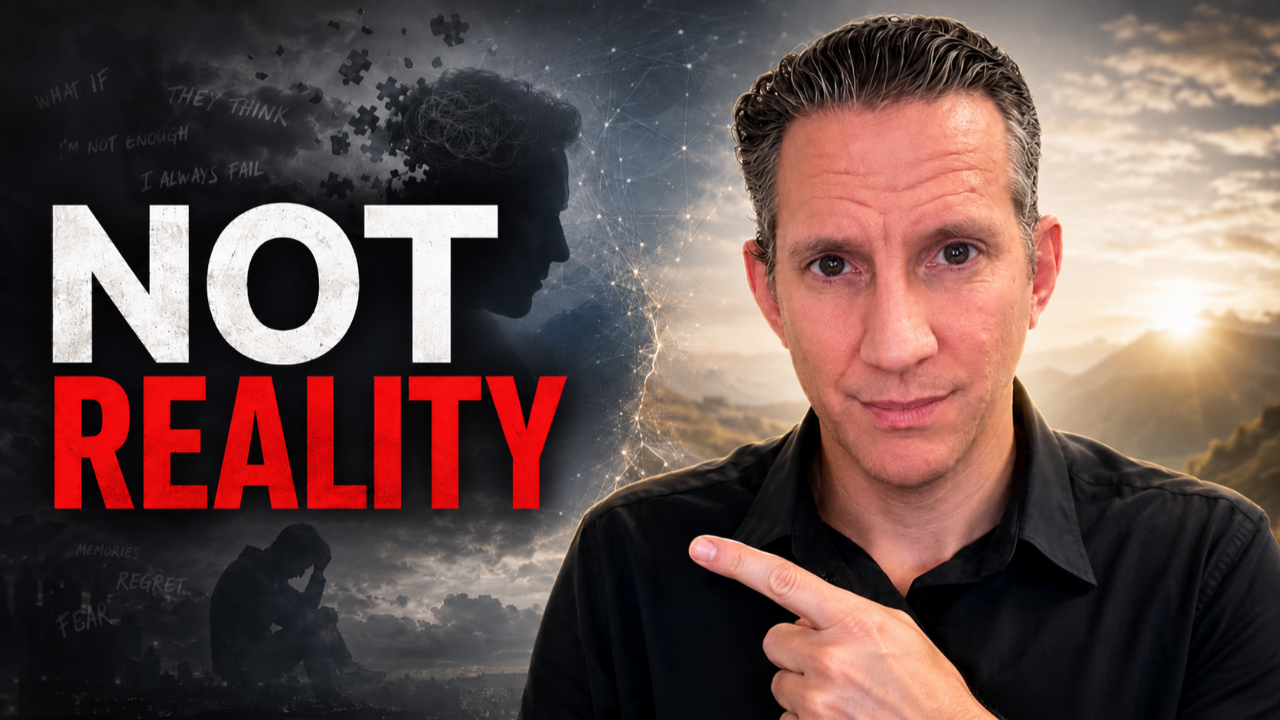
But very often, we are not responding to reality itself. We are responding to the story we are living inside.
That story might be quiet. It may not announce itself as a story. It may not sound dramatic or obviously false. In fact, it probably sounds reasonable. It sounds like your honest assessment of life.
“I’m not ready.”
“I always mess this part up.”
“People like me don’t really succeed at this.”
“I’m not the kind of person who can put myself out there.”
“This probably won’t work.”
“I need to wait until I feel more confident.”
And because these thoughts are familiar, they feel true. But familiar is not the same as true.
This is one of the most important things to understand about the subconscious mind. Your subconscious does not just store memories. It also stores meanings. It links past experiences with expectations, emotions, identity, and perceived safety. Over time, those links can become an inner narrative, and that inner narrative quietly shapes what you notice, what you avoid, what you expect, and what you allow yourself to do.
A person who carries the story “I’m always behind” will see life differently than someone who carries the story “I can figure things out.”
A person who carries the story “If I’m visible, I’ll be judged” will experience opportunity differently than someone who carries the story “My voice can help people.”
A person who carries the story “Success creates pressure” may want to grow consciously, while subconsciously feeling unsafe every time growth gets close.
This is why self-sabotage can be so confusing.
From the outside, it may look like procrastination, inconsistency, avoidance, overthinking, perfectionism, or lack of discipline. But underneath the behavior, there is often a story that makes the behavior feel necessary.
If your subconscious story says that being seen is dangerous, hiding will feel protective.
If your subconscious story says that failure would be humiliating, over-preparing will feel responsible.
If your subconscious story says that success will cost you connection, pulling back may feel like staying safe.
If your subconscious story says that you are not the kind of person who follows through, then stopping halfway may feel strangely familiar, even when you genuinely want to keep going.
The conscious mind can argue with these patterns all day. It can create better goals, better plans, better schedules, better affirmations, and better intentions. Those things can help. But if the deeper story remains unchanged, the nervous system may continue to respond to the old version of reality.
This is why people can know what to do and still struggle to do it.
They are not just dealing with a strategy problem. They are dealing with an inner story problem.
And that story is powerful because it does not feel like a story while you are inside it. It feels like the world.
It feels like “this is just how things are.”
It feels like “this is just who I am.”
It feels like “this is what always happens.”
But the story is not reality. It is a meaning your mind has organized around.
That does not mean the story came from nowhere. Most inner narratives are not random. They are often built from real experiences: criticism, embarrassment, failure, rejection, family dynamics, cultural messages, early success, early disappointment, or repeated emotional patterns.
At some point, your mind learned something.
Maybe it learned that standing out was risky.
Maybe it learned that wanting more led to disappointment.
Maybe it learned that being too confident made people uncomfortable.
Maybe it learned that love required achievement.
Maybe it learned that peace required silence.
Maybe it learned that safety meant staying small.
These meanings may have made sense at the time. They may have helped you adapt, belong, perform, survive, or avoid pain. But a story that once helped you make sense of life can eventually become the very thing that keeps you from changing it.
That is where the real work begins.
Not by attacking yourself.
Not by trying to force confidence on top of a story that still says you are unsafe.
Not by pretending the past did not affect you.
The work begins by noticing the story.
What do I keep assuming is true?
What conclusion have I drawn about myself?
What do I expect will happen if I take the next step?
What identity am I still living from?
What story would make this resistance make sense?
Those questions matter because once you can see the story, you are no longer completely fused with it.
You can begin to question it.
You can begin to update it.
You can begin to separate what happened from what it came to mean.
That distinction is important.
Something may have happened. The criticism may have been real. The failure may have been real. The rejection may have been real. The embarrassment may have been real.
But the meaning your subconscious attached to it may not be the final truth of who you are.
One moment of failure does not mean you are a failure.
One painful rejection does not mean you are not worthy of being seen.
One season of inconsistency does not mean you are incapable of follow-through.
One old pattern does not have to become your identity.
This is the deeper purpose of subconscious reprogramming. It is not about pretending everything is positive. It is not about forcing yourself to think nice thoughts. It is about working with the deeper story that your mind and body have been using to interpret reality.
When that story begins to change, your behavior often changes in a more natural way.
You do not have to fight so hard to be visible if visibility no longer feels like danger.
You do not have to force yourself to follow through if follow-through begins to match who you believe you are becoming.
You do not have to keep rehearsing the worst-case scenario if your inner picture of the future begins to feel safer, clearer, and more possible.
This is why the story you live inside matters so much.
Because your story becomes the lens.
The lens shapes what you see.
What you see shapes what you feel.
What you feel shapes what you do.
And what you do eventually shapes the life you keep proving to yourself is true.
So the question is not only, “What do I want to change?”
A deeper question is:
“What story am I trying to change from?”
Because if the old story is still running underneath the surface, every new goal has to pass through an old filter.
This is what I explore more deeply in my latest video, The Story You’re Living Inside. You can watch it below, or on YouTube.
And if this resonates, I also recommend starting with the free Subconscious Starter Kit. It includes short orientation videos on the subconscious mind and hypnosis, plus the Sanctuary Session, a guided audio experience designed to help you quiet the mental noise and begin working with your subconscious more intentionally.
The goal is not to invent a fake story.
The goal is to stop confusing an old story with reality.
Because the story you inherited, absorbed, or repeated does not have to be the story you keep living inside.
Breakthroughs Begin Within.
Start with the Free Starter Kit to better understand the patterns behind your resistance, build steadier internal alignment, and access our free live training.